News

INL Workshop on Medical Devices Helps Shape EU Policy Milestone in Advanced Materials

INL Workshop on Medical Devices Helps Shape EU Policy Milestone in Advanced Materials

Just months after INL hosted a high-level workshop on Advanced Innovative Materials for Medical Devices, the momentum generated in Braga has culminated in a major policy advancement: At its second meeting, the High Level Technology Council for Advanced Materials, held in Brussels last week, expanded its industry priorities to include advanced materials for medical devices. This marks a significant recognition of the groundwork of the subgroup tasked with examinign this option discussed at INL in April, where European leaders, policymakers, and innovators gathered to explore the transformative potential of advanced materials in health materials and associated technologies. “The inclusion of materials for health in the form of medical devices is a strategic priority for Europe,” said Dr Clivia Sotomayor Torres, Director-General of INL, who chaired the subgroup with support form Dr Lorena Diéguez, research group leader at INL.  She added: “it’s a testament to the power of collaborative dialogue and scientific foresight.” From INL to Brussels: Driving the Agenda Forward Organised under the High Level Technology Council for Advanced Materials, an initiative of the European Commission launched in late 2024, the April 2025 workshop at INL served as a strategic forum under the Council’s Subgroup on Future Priorities. It brought together key European figures including Irene […]

Read more
Celebrating 5 years of Nanosafety excellence at INL: the legacy of the SINFONIA Project

Celebrating 5 years of Nanosafety excellence at INL: the legacy of the SINFONIA Project

The International Iberian Nanotechnology Laboratory (INL) proudly celebrates the successful conclusion of the SiNfONiA Project, marking five years of groundbreaking progress in nanosafety research under the leadership of Dr. Ernesto Alfaro-Moreno, ERA Chair in Nanosafety. Launched in 2020 and co-funded by the Horizon Europe programme, SINFONIA laid the foundation for a dedicated Nanosafety Research Group at INL — now recognized for its scientific excellence, regulatory relevance, and global reach. Over its five-year trajectory, the project has: + Established a state-of-the-art nanosafety research infrastructure at INL; + Achieved OECD Good Laboratory Practice (GLP) accreditation, the first for our institution; + Built a robust international network across Europe, Latin America, Asia, and North America; + Coordinated and participated in major EU-funded projects aligned with responsible innovation in nanotechnologies; In a closing interview, Dr. Alfaro-Moreno reflects on the project’s transformative impact: “SINFONIA was not just about scientific output. It was about creating a lasting ecosystem for nanosafety, combining capacity building, regulatory standards, and international cooperation.” The video offers a behind-the-scenes look at the project’s evolution, milestones, and what lies ahead for INL’s Nanosafety Group, including a continued focus on human health, environmental risk assessment, and emerging regulatory frameworks. SINFONIA’s legacy is one of excellence, leadership, and vision — […]

Read more
Magnetic 1D van der Waals heterostructure

Magnetic 1D van der Waals heterostructure

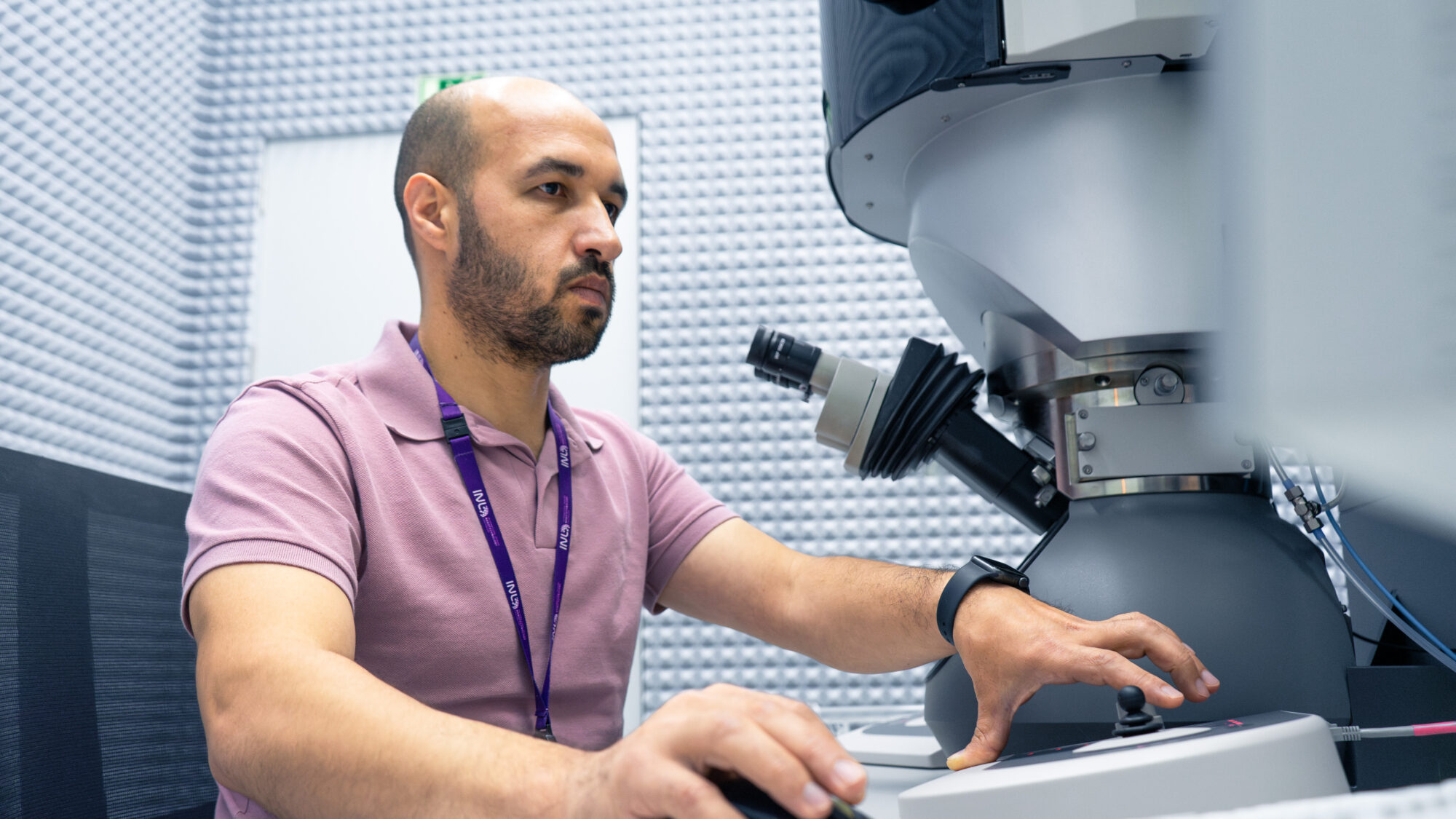
A new spin on magnetism: INL researchers create 1D magnetic nanotubesResearchers at the International Iberian Nanotechnology Laboratory (INL) in Braga, Portugal, have achieved a major breakthrough at the intersection of quantum materials and nanotechnology. In a new study published in Communications Chemistry, they report the synthesis and atomic-scale characterisation of high-quality, single-walled hollow magnetic CrI₃ nanotubes – a landmark advance in the control of low-dimensional magnetism. What distinguishes this work is the confinement of the iconic layered ferromagnet CrI₃ within the innermost cavities of multiwall carbon nanotubes (MWCNTs). This structural innovation yields truly 1D magnetic heterostructures with unprecedented aspect ratios. “This is not just a structural feat, it’s a conceptual leap forward to develop a fully isolated, truly 1D magnetic heterostructure.”, says the first author Ihsan Çaha. Exploring magnetic states This study raises new questions about magnetism at the nanoscale. Using X-ray magnetic circular dichroism (XMCD) at the ALBA Synchrotron in Spain, the researchers observed unusual magnetic behavior in the CrI₃ nanotubes. “Our XMCD results carried out at ALBA synchrotron show that chromium atoms retain magnetism, but act like paramagnets with minimal remanence,” explains Aqrab ul Ahmad. “This behaviour hints at an intriguing suppression of long-range magnetic order, until now, unexplored.” Theoretical insight […]

Read more
Intelligent biosensor developed at INL combines NMR and AI to improve infectious disease diagnostics

Intelligent biosensor developed at INL combines NMR and AI to improve infectious disease diagnostics

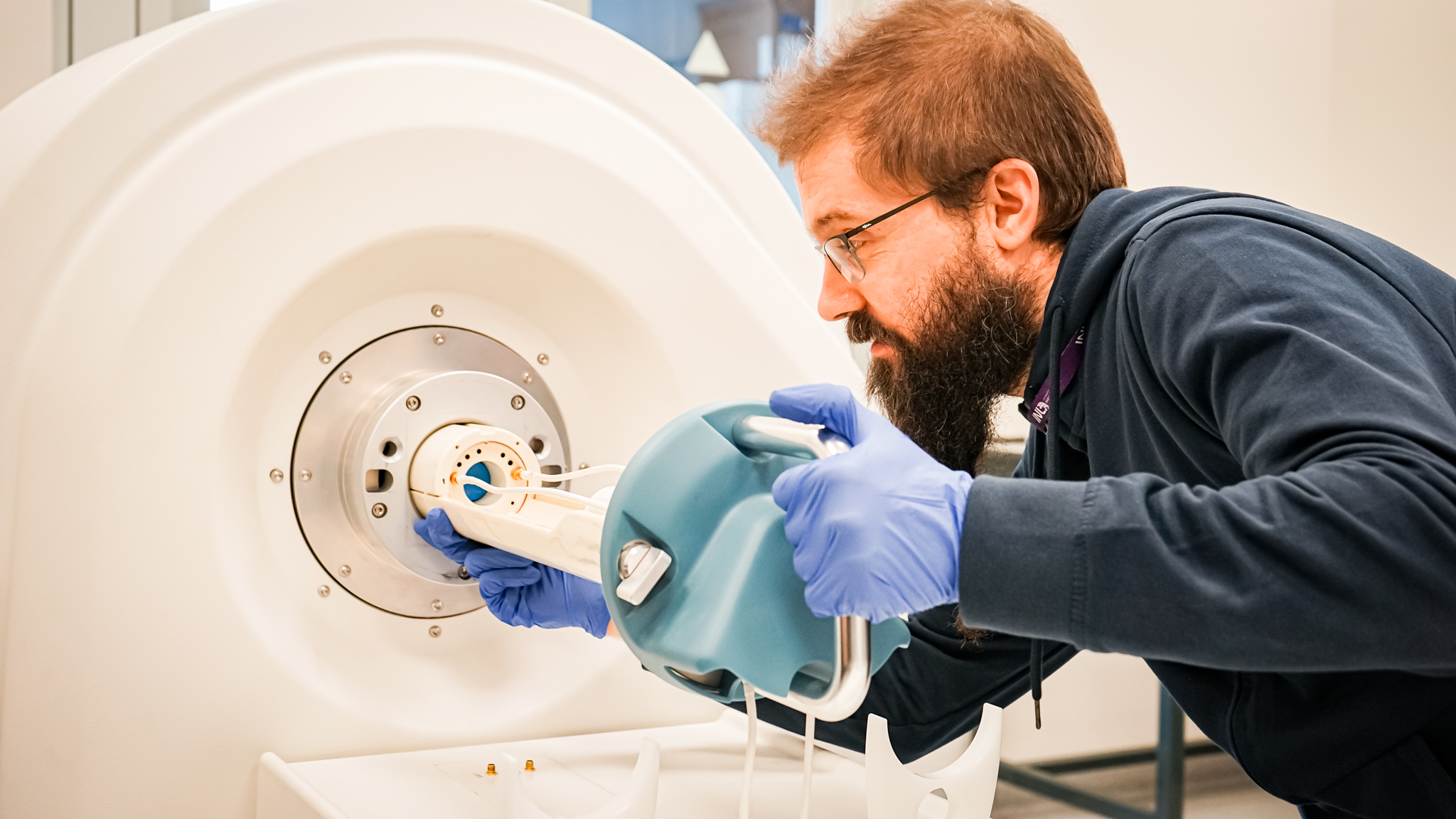
In the fight against infectious diseases, rapid and accurate diagnosis is key to effective treatment and control. INL researchers have developed a breakthrough biosensor that combines cutting-edge nuclear magnetic resonance (NMR) technology with artificial intelligence. This portable device not only speeds up diagnosis but also provides detailed insights into the immune response, opening new possibilities for point-of-care testing. The study, led by Juan Gallo and Weng Kung Peng published in the journal Biosensors and Bioelectronics, demonstrates how this innovative approach can detect viral infections and monitor patient recovery faster and more precisely than traditional methods, all within a compact, user-friendly system. The technology uses magnetic nanoparticles specifically designed to detect viral particles, as well as the immune response they trigger in the body. When these nanoparticles bind to target molecules in a small biological sample, they cause measurable changes in the sample’s magnetic properties. These changes are captured by the portable NMR system and translated into meaningful diagnostic information using machine learning models. “What sets this system apart is its ability to offer a more complete picture of the patient’s status,” explains Juan Gallo. “It doesn’t just tell you if someone is infected – it can help determine whether they […]

Read more
INL Open Day 2025: A Celebration of Science, Innovation, and Community

INL Open Day 2025: A Celebration of Science, Innovation, and Community

Last Saturday, INL welcomed more than 800 visitors of diverse nationalities for a day filled with curiosity, discovery, and joy. Families, students, researchers, and science enthusiasts of all ages came together to experience what it’s like to be a scientist for a day and the energy throughout the building was unforgettable. Across the INL campus, guests explored interactive exhibits and live demonstrations that brought science to life, from fluid dynamics and 3D printing to nano-enabled food and health technologies. In the “NanoPlanet: Fixing the Future” area, visitors discovered how nanotechnology is addressing some of the world’s most pressing challenges, boosting sustainability, energy storage, and public health. The Kids Zone provided a space where younger visitors could build molecules, explore science hands-on, and enjoy the new INL kids’ book, designed to spark curiosity through storytelling. Art and science merged in Pepto Playground, a performance by the Foqacia project in collaboration with Arte Total. Inspired by the paradoxes of quantum physics, the dancers moved through shifting pink landscapes and invisible forces, inviting audiences to reflect on uncertainty, presence, and transformation. INL researchers also presented impactful projects, from 3DSecret’s pioneering cancer research using microfluidic platforms to national innovation efforts like NGS Storage and GreenAuto, which aim to shape the future of clean energy and mobility. Guests found […]

Read more
INL Hosts First Edition of Falling Walls Lab Portugal, Showcasing Bold Ideas with Global Potential

INL Hosts First Edition of Falling Walls Lab Portugal, Showcasing Bold Ideas with Global Potential

Yesterday afternoon, June 11, the International Iberian Nanotechnology Laboratory (INL), in Braga, proudly hosted the first edition of Falling Walls Lab Portugal, bringing to the stage five semi-finalists with bold, breakthrough ideas aiming to shape the future of science and society. The event is part of the global Falling Walls initiative, a renowned competition that gives early-career researchers, innovators, and visionaries the opportunity to present their work in just three minutes, in a dynamic and high-impact format. The semi-finalists at the INL edition presented proposals ranging from novel treatments for breast and lung cancer, to strategies addressing neuroinflammation, promoting scientific inclusion in schools, and creating new pathways to connect art, science, and communities. The event was hosted by Marisol Dias, INL researcher and 2024 Falling Walls Lab global finalist, who brought both energy and inspiration to the session. After the pitches, the audience enjoyed a coffee break and networking session, followed by the highly anticipated jury deliberation and announcement of winners. The winner of this first edition of Falling Walls Lab Portugal was Leonor Ribeiro, with her project “Breaking the Wall of Lung Cancer with a Beam of Light” – a promising approach using photonics to improve lung cancer treatment. Leonor will represent Portugal at the Falling Walls Science Summit in Berlin this November, joining an international […]

Read more
INL Celebrates International Day of Light 2025 with Focus on Quantum Science and Technology

INL Celebrates International Day of Light 2025 with Focus on Quantum Science and Technology

On May 16, the International Iberian Nanotechnology Laboratory (INL) held a public event dedicated to quantum science and technology, marking the International Day of Light 2025. This year’s edition aligned with the International Year of Quantum Science and Technology (IYQ2025), commemorating a century since the foundation of quantum theory. The event featured engaging presentations from INL researchers on key topics in quantum research, including photon-based quantum computing, diamond quantum sensors in neuroscience, and the role of topological materials in light detection. These talks aimed to make cutting-edge quantum technologies more accessible to the general public. Visitors also took part in guided tours of INL’s advanced research facilities, including labs for electron microscopy, nanofabrication, and quantum sensing technologies. Live demonstrations gave attendees a closer look at how INL scientists use light at the quantum level to drive innovation in nanotechnology and materials science. The event was organised in collaboration with UNESCO’s International Day of Light, the MICRODIA node of the Portuguese Platform of Bioimaging (PPBI), and the IYQ2025 global initiative. It concluded with a networking coffee break, an interactive science quiz, and a Q&A session with researchers, encouraging dialogue between the scientific community and the public. Through events like this, INL […]

Read more
Interview with António Costa: Where 2D Materials Meet Quantum Innovation

Interview with António Costa: Where 2D Materials Meet Quantum Innovation

Since earning his PhD in 1998, António Costa—Associate in the Rossier Research Group—has dedicated his research to the theoretical exploration of low-dimensional magnetic systems, with a particular emphasis on spin excitations. By combining analytical approaches with computational modeling, he investigates how magnetic materials respond to external influences such as magnetic fields and electrical currents, uncovering fundamental mechanisms that underpin their behavior. Your research focuses on 2D materials and the interface between plasmonics and magnonics. What recent breakthroughs stand out in your work?On the magnonics side, we have been studying the spin excitations of a new kind of magnetic materials called altermagnets. These have properties that are sort of in-between ferromagnets and antiferromagnets. We have demonstrated that the lifetime of magnons in metallic altermagnets can be highly anisotropic, a property that can be exploited technologically to guide magnons along certain paths in the material. Further details can be found in the publication here.On the magnonics/plasmonics interface, we have shown that graphene plasmons can couple strongly to the low-energy magnons in a 2D insulating ferromagnet, which can be uses as a new way to probe magnons in 2D materials, and also as a way to convert a magnetic into an electric signal and […]

Read more
1 2 3 4 5 104