News

Braga Startups Shine | Global Health Accelerator Demo Day at INL

Braga Startups Shine | Global Health Accelerator Demo Day at INL

The Demo Day of the Global Health Accelerator (GHA) took place on Thursday, September 18, at the International Iberian Nanotechnology Laboratory (INL). This dynamic event, organised by Startup Braga in partnership with INL and 2CA-Braga, brought together 11 innovative health startups, which showcased transformative solutions developed throughout the 6-month program.  The Demo Day gathered investors, health sector leaders, researchers, business partners, and students, offering them a unique insight into the next generation of innovations in digital health, biotechnology, and nanotechnology. Participants had the opportunity to engage directly with founders, explore collaboration opportunities, and witness the tangible results of a vibrant innovation ecosystem. The 2025 edition celebrated the achievements of 11 pioneering startups, with expressTEC and MetaBlue Solution (Otitest) earning top honours for their transformative health solutions. Their recognition underscores the growing strength of Braga’s innovation ecosystem and its ability to nurture high-impact ventures in the biomedical space.Other presenting startups were: Apollo Medica, BestHealth4U, BloodFlow, DocBay, Enhanced Fertility, Fetalix, Medgical, OmniumAI, and SafeCaring. This initiative not only highlights the strategic role of INL in fostering innovation at the intersection of science and entrepreneurship but also reinforces Braga’s position as a hub for emerging health technologies. The upcoming Bio-MedTech Hub will further strengthen […]

Read more
European Researchers’ Night 2025 is back in Braga!

European Researchers’ Night 2025 is back in Braga!

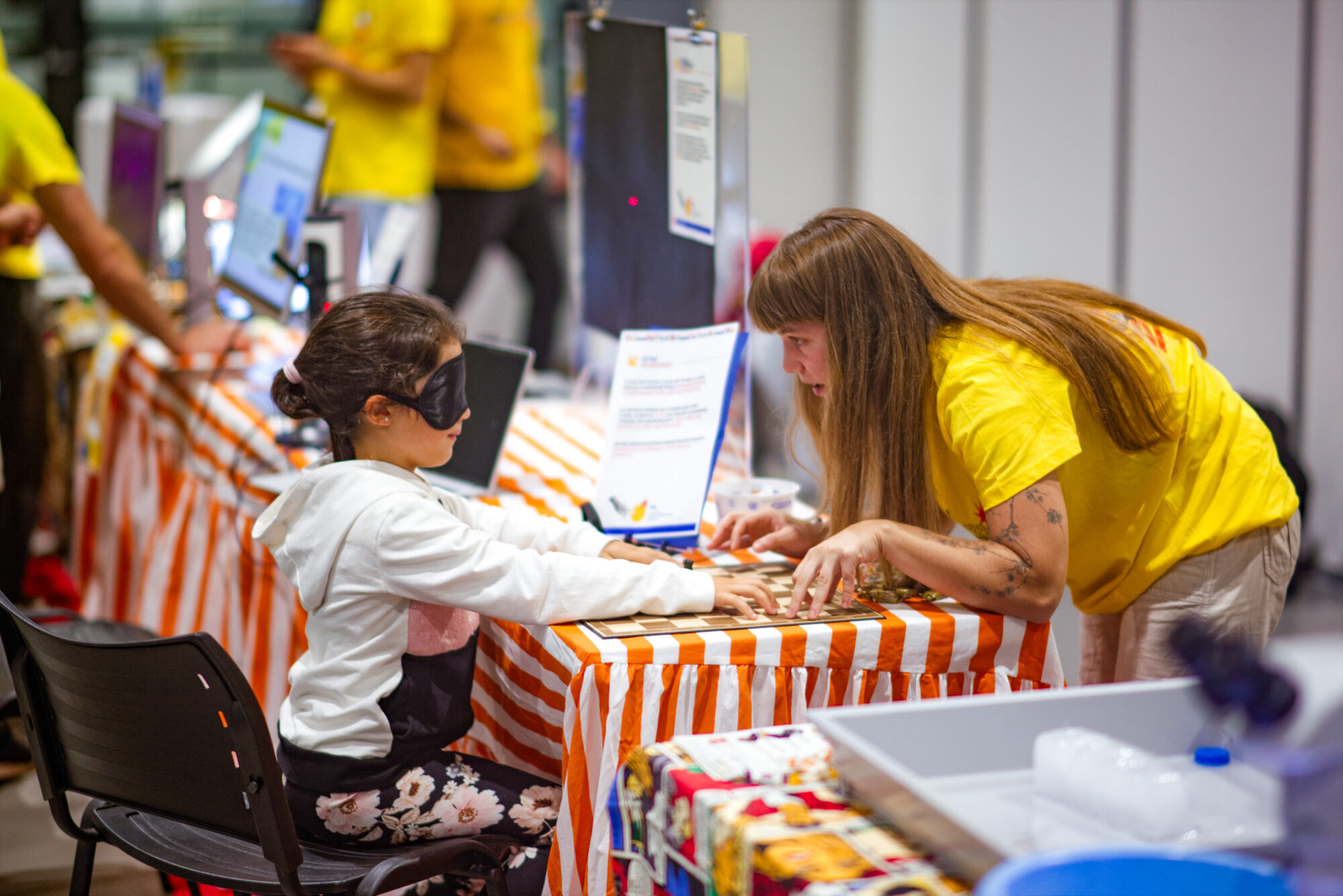
On Friday, September 26, 2025, from 2:00 p.m. until midnight, the Forum Braga will come alive with experiments, performances, and conversations as the European Researchers’ Night (ERN) makes its return, organised locally by Iberian International Nanotechnology Laboratory (INL) and Escola de Ciências da Universidade do Minho. INL alone will feature more than 30 research initiatives, transforming complex science into an immersive experience designed for all ages. Science action at the INL Booth The INL Booth will offer visitors the chance to explore the many ways nanoscience and technology intersect with daily life. In “Fighting Water Pollution Through Monitoring”, participants will discover how plastics and other pollutants travel through oceans and rivers, and how monitoring devices combined with nature-based solutions can help reduce contamination carried by stormwater. “Cutting Ice with Graphene” will demonstrate the surprising ability of ultra-thin graphene and graphite foils to slice through ice without the need for sharp tools, showcasing one of the many astonishing properties of this wonder material. The “Transistor Demonstration” will bring electronics down to earth, explaining what transistors are, how they work, and why they remain the building blocks of modern technology. In “Crafting the Microworld”, visitors will dive into the art of magnetic patterning through […]

Read more
INL Career Fair Empowers Early-Stage Researchers

INL Career Fair Empowers Early-Stage Researchers

The International Iberian Nanotechnology Laboratory proudly hosted its first Career Fair on Wednesday September 17th 2025, a milestone event designed to empower early-stage researchers and foster meaningful connections with industry and academia. The event was opened by INL’s Director-General Clivia Sotomayor, who delivered an inspiring message to the research community. She encouraged young scientists to pursue their curiosity with conviction, to follow the questions that intrigue them most, and to embrace the challenges of scientific discovery. “This is how you become successful scientists,” she affirmed, highlighting the importance of passion and perseverance in shaping a fulfilling career. Co-organised by INL’s Early Stage Researchers Association (ESRA) and the EU-funded FUNLAYERS project, the Career Fair brought together mid- and large-sized international companies and institutions to engage with INL’s vibrant early-stage research community. Event sponsors included Continental, Synopsis, Aimplas, Graphenest, and Holoss, each presenting their career opportunities and showcasing their work through dedicated booths and pitch sessions. Networking extended into the evening hours, sponsored by LETRA. In the lead-up to the event, INL hosted a preparatory workshop, “Level Up Yourself: Skills, CV & LinkedIn“, sponsored by Chaperone and FUNLAYERS, offering researchers practical guidance on strengthening their CVs and preparing to meet and network […]

Read more
A new tool being developed at INL can explore electrical effects on cells

A new tool being developed at INL can explore electrical effects on cells

While we usually consider electronics as a fruit of human engineering, electrical signalling is also fundamental in biology, playing an essential role in cellular functions from neuronal communication and muscle contraction to cell migration, proliferation and differentiation. Electrical stimulation activating these biological functions is therefore also a powerful tool for both fundamental research and for therapeutic applications. Alar Ainla, research scientist at INL, in collaboration with the Life and Health Sciences Research Institute (ICVS) at the University of Minho, has developed a novel multi-channel in vitro electrical stimulator to help study these effects in a versatile and accessible way. Their work was published in BMC Biomedical Engineering. Cells can sense and respond to the electric fields. Exposure to an electric field changes the electrical potential across the cell membrane, influencing voltage-gated ion channels and calcium signalling, which can trigger nerve impulses, muscle contraction, and even long-term processes like synaptic plasticity, cell proliferation, and differentiation. In stem and neuronal cells, electrical stimulation can promote axon growth, enhance the expression of neuronal markers, and trigger the release of molecules that guide the differentiation of neighbouring cells. In other words, cells behave like tiny sensors and communicators, adjusting their internal processes in response […]

Read more
New Open Access Book on Nanosafety Published by INL Researchers

New Open Access Book on Nanosafety Published by INL Researchers

INL is proud to announce the release of Nanosafety: A Comprehensive Approach to Assess Nanomaterial Exposure on the Environment and Health, an open-access book edited by INL Group Leader Ernesto Alfaro-Moreno and Fiona Murphy, with contributions from researchers across the Pastrana, Espiña, and Alfaro-Moreno groups. The book offers a multidisciplinary perspective on nanotoxicology, immunotoxicology, genotoxicity, and epigenetics, providing practical guidance for ensuring the safe development and application of nanomaterials. Several of the contributing authors were supported by European and regional projects, including the SINFONIA ERA Chair, SbDToolBox, and others — all of which have helped strengthen INL’s nanosafety research capacity. This publication reflects the collaborative and cross-cutting nature of nanosafety work at INL and its commitment to responsible innovation. Nanosafety – A Comprehensive Approach to Assess Nanomaterial Exposure on the Environment and HealthBook | Open Access | © 2025 INL Authors: Ernesto Alfaro-Moreno; Vânia Vilas-Boas; Filipa Lebre; M. González-Durruthy; Ana R Ribeiro; Mafalda Neto; Lorenzo Pastrana; Catarina Gonçalves; Nivedita Chatterjee; Begoña Espiña; Laura Rodriguez-Lorenzo

Read more
INL researcher Vicente Lopes wins SiNANO Institute Best Paper Award

INL researcher Vicente Lopes wins SiNANO Institute Best Paper Award

The SiNANO Institute Androula Nassiopoulou Best Paper Award 2025 has been awarded to INL researcher Vicente Lopes for his outstanding work presented at the 2025 EUROSOI-ULIS Conference. The paper, titled “Graphene-enabled glucose sensing: From field-effect transistors to next-generation wearables”, introduces a breakthrough approach to non-invasive glucose monitoring. By integrating graphene into contact lenses, the team developed stable, transparent coatings that enable tear-based glucose sensing, paving the way for innovative wearable technologies in healthcare. The award-winning work is the result of a collaborative effort by INL researchers Tiago Abreu, Mafalda Abrantes, Tiago Pereira, Pedro Alpuim, and Andrea Capasso, alongside lead author Vicente Lopes. The prize will be officially presented during the 2026 EUROSOI-ULIS Conference in Granada, Spain. Learn more about INL’s research on graphene-based glucose biosensors here. Congratulations to the team on this remarkable achievement!

Read more
INL Statement on National Day of Mourning

INL Statement on National Day of Mourning

The International Iberian Nanotechnology Laboratory stands in solidarity with the people of Portugal on this National Day of Mourning, proclaimed in the wake of the tragic Elevador da Glória accident in Lisbon. We offer our condolences to the bereaved families and our deepest sympathies to all those injured or touched by this tragedy. As an international organisation, with Portugal as one of our founding member states, INL shares in the nation’s sorrow. We honour the memory of those who perished and unite with our Portuguese colleagues and the entire country in respectful remembrance on this solemn day.

Read more
Shedding light on ultrafast heat transport in graphene

Shedding light on ultrafast heat transport in graphene

Managing heat efficiently is one of the great challenges in the development of next-generation electronic and optoelectronic devices. At the nanoscale, energy moves in ways that defy classical descriptions of heat transfer. Houssem Rezgui, researcher from the Sotomayor research group at INL, has now provided new insights into how energy flows in graphene when excited with ultrafast laser pulses. Their work, published as a Letter in Journal of Physics D: Applied Physics, explores how electrons and vibrations in the lattice (known as phonons) interact in timeframes shorter than a trillionth of a second. Graphene, with its remarkable electronic and thermal properties, is an ideal platform for probing these processes. When struck by a femtosecond laser pulse, graphene enters a highly non-equilibrium state: electrons absorb the incoming energy almost instantly, and only afterward begin to share it with the lattice. Traditionally, this sequence has been described by the two-temperature model, which assumes that electrons and phonons equilibrate in a straightforward way. However, the INL researcher shows that reality is more complex. Using an extended temperature model, Rezgui revealed that different phonon branches respond at distinct timescales, with longitudinal acoustic phonons playing a key role in energy absorption and redistribution. Strikingly, their […]

Read more
Magnetic nanowires take hydrogen production to the next level

Magnetic nanowires take hydrogen production to the next level

As the world looks for cleaner ways to produce energy, green hydrogen (fuel made from water and renewable electricity) is gaining attention as a promising solution. To make green hydrogen affordable and efficient, better catalysts are needed to speed up the chemical reactions involved. Researchers at INL – International Iberian Nanotechnology Laboratory have developed a new type of magnetic catalyst that could change the game. Their findings, recently published in ACS Nano, reveal how these magnetic nanowires efficiently catalyse the oxygen evolution reaction, a key reaction in hydrogen production from water. The research team led by Yury Kolen’ko created cobalt ferrite (CoFe2O4) nanowires using a technique called electrospinning, which forms ultra-thin fibres by using an electric field to draw solid threads from a liquid solution; imagine sugar being spun into cotton candy, but at the nanoscale. By precisely controlling the calcination temperature, the team transformed the fibres into nanowires with excellent magnetic properties, critical for their catalytic performance. Why does magnetism matter? The oxygen molecules, which are formed during the water-splitting process, have a special triplet spin state. When the catalyst is magnetic, it can influence the spin alignment of the reaction intermediates, guiding the reaction to proceed faster and […]

Read more
1 2 3 4 5 6 133