News

INL strengthens collaborative ties with Argentine researchers

INL strengthens collaborative ties with Argentine researchers

The governments of Argentina, Portugal and Spain signed a memorandum of understanding to strengthen scientific and technical cooperation between the three countries in the area of nanotechnology. The objective is to develop joint projects in the area of nanotechnology and encourage the training of highly qualified human resources. The document will facilitate the access to Argentine institutions of science, technology and innovation, researchers, students and companies to the research facilities of the International Iberian Nanotechnology Laboratory. The memorandum was signed by the Argentine Minister of Science, Technology and Innovation, Lino Barañao, the Portuguese Minister of Education and Science, Nuno Crato, and the Spanish Ambassador Eduardo Junco, representing the Spanish Secretary of State for Research, Development and Innovation, Carmen Vela, on March 11th in Lisbon.

Read more
Algerian Minister of Higher Education visited INL

Algerian Minister of Higher Education visited INL

The Algerian Minister of Higher Education and Scientific Research, Mohamed Mebarki, accompanied by a group of representatives from Algerian Scientific and Educational Institutions, visited the International Iberian Nanotechnology Laboratory to explore the opportunity to establish scientific cooperation. “This visit is an opportunity to attract talented Algerian students and researchers to work with us at INL“, said Paulo Freitas, deputy director of INL. “We can provide a state of the art facility and benefit from the specific knowledge and know-how that Algeria can provide as a result of its more developed sectors such as the natural gas industry“. The Spanish State Secretary for Research, Development and Innovation, also present during the event, considered the visit to be of “extraordinary importance”. Carmen Vela underlined the commitment of both INL funding countries, Portugal and Spain, towards its international nature. INL’s international dimension, “has to go beyond its written Statues and become effective through real collaborations with other countries“, added Carmen Vela. José Ferreira Gomes, Portuguese State Secretary for Higher Education, underlined the advantage of attracting foreign students and researchers to INL. “It is interesting for us to have young people developing their studies and research in our laboratories”.

Read more
Theory Group Research on “Control of single-spin magnetic anisotropy by exchange coupling” published in Nature Nanotechnology

Theory Group Research on “Control of single-spin magnetic anisotropy by exchange coupling” published in Nature Nanotechnology

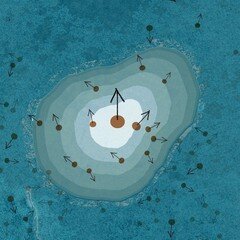
When directly on a metal surface, the magnetism (black arrows) of a single cobalt atom (orange circles) is screened by strong interactions with the surrounding metallic sea (blue). By moving these atoms towards the centre of an island of thin insulator material (white), we can gradually decrease that strength of that interaction, which results in a remarkable enhancement of the magnetic anisotropy. Image Credit: Alfaro Cuevas (http://alfarocuevas.blogspot.com/) The energy needed to change the magnetic orientation of a single atom can be modified by varying the atom’s electrical coupling to nearby metals. The capability to determine an atom’s magnetic orientation provides control over its magnetic stability and therefore its usefulness in a variety of future device applications. This striking result was published in the current edition of the journal Nature Nanotechnology by an international group of scientists working at International Iberian Nanotechnology Laboratory (Portugal), the London Centre for Nanotechnology (LCN) at UCL (UK), the University of Zaragoza (Spain), and the Max Planck Institute of Microstructure Physics (Germany). Read more here. Journal link: Control of single-spin magnetic anisotropy by exchange coupling. doi: 10.1038/NNANO.2013.264

Read more
Director General of INL invited to participate in Nanomercosur 2013

Director General of INL invited to participate in Nanomercosur 2013

The Director-General of INL, José Rivas, was invited to participate in the event Nanomercosur 2013, that took place on November 12 -14, in Buenos Aires, Argentina. The meeting was dedicated to «Nanotechnology and Industrial Competitiveness». On the first day, José Rivas presented the theme «Nanotechnology from the Laboratory to the market». He also contributed to the debate dedicated to the subject of «Cooperation between academia, industry and governance», with his talk related to the INL project on «International cooperation in Nanotechnology», on the second day of the event. The participation of the INL Director-General in Nanomercosur 2013 comprised meetings with important members of the Argentinian Ministry of Science, Technology and Production, representatives of the Fundación Argentina de Nanotecnología, as well as business people from the Mercosur production sector, who showed great interest in possible collaborations with INL. Nanomercosur 2013 was organized by the Fundación Argentina de Nanotecnología (FAN). Researchers, engineers, speakers from Argentina, Brazil, Uruguay, Spain, Portugal, Italy and the United States of America, as well as entrepreneurs from the European and Latin-American nanotechnology sector gathered for three days at Nanomercosur 2013.

Read more
10 research projects selected under INL-Brazil collaboration

10 research projects selected under INL-Brazil collaboration

10 nanotechnology research projects were selected within the INL-Brazil collaboration agreement (CAPES/INL call). The projects will be developed in Brazilian research centers in collaboration with the International Iberian Nanotechnology Laboratory. This initiative arises from the Memorandum of Understanding signed at the International Iberian Nanotechnology Laboratory (INL), earlier this year, between the governments of Brazil, Portugal and Spain. The results of the 1st call launched by the Brazilian Ministry of Education (CAPES) can be found here. The collaboration agreement allows the access of Brazilian researchers and students to INL’s state of the art facilities and promotes increased awareness and mobility among the different centers. The main areas of cooperation are electronic nanodevices, nanostructures and nanoparticles for applications in nanomedicine, environment control and water and food quality monitoring.

Read more
INL held joint workshop with JRC on nanotechnology applied to food, nanomedicine, and toxicity

INL held joint workshop with JRC on nanotechnology applied to food, nanomedicine, and toxicity

On November 19th INL hosted a joint workshop with researchers from the Joint Research Center (JRC) of the European Commission and INL researchers focused on nanotechnology applications to food, nanomedicine, and toxicity, strategic research areas at International Iberian Nanotechnology Laboratory. The full programme is available here. INL input focussed on the research developed on biosensor platforms, detection of allergenic ingredients on food products, nanoparticles for food and biomedical applications, and the design and characterization of biointerfaces. The invited speakers from the JRC presented ongoing work involving nanomaterials and devices, and in particular covered regulatory aspects, definitions, and testing methodologies. Following a visit to the INL facilities and main laboratories, INL researchers, external experts and JRC members met to exchange experiences and knowledge. Common research subjects were identified, and possible ways of further collaboration between INL and different JRC institutes is expected to start soon. Invited experts from the JRC were Elke Anklam (Director of the Institute for Reference Materials and Measurements), Juan Riego Sintes (Nanobiosciences Unit), Josefa Barrero Moreno (Chemical Assessment and Testing Unit), Franz Ulberth (Standards for Food Bioscience Unit), and Aurelie Gommenginger (Interinstitutional and Stakeholder Relation Unit). Experts form research and academia from Bosnia and Herzegovina, Montenegro, Turkey, […]

Read more
Spintronics in Graphene – 11 PhD & 4 Post-Doctoral Positions available

Spintronics in Graphene – 11 PhD & 4 Post-Doctoral Positions available

The SPINOGRAPH – “Spintronics in Graphene” is a Marie Curie Initial Training Network (ITN) providing state-of-the-art training for early-stage researchers (ESR) and Experienced Researchers (ER) in the field of Spintronics in Graphene. The network brings together 9 world-leading partners and offers a total of 11 Early Stage Research (ESR) PhD positions for 36 months and 4 Experienced Researcher (ER) post-doctoral positions for 24 months. Host institutions are INL, Braga, Portugal-Coordinator (2 PhD), AMO GmbH, Aachen, Germany (1 postdoc), CIC Nanogune, San Sebastian, Spain (2 PhD), CNRS, Paris, France (1 postdoc), CSIC Madrid, Spain (2 PhD), Graphenea, San Sebastian, Spain (1 postdoc), University of Aachen, Germany (1 PhD, 1 Postdoc), University of Groningen, Netherlands (2 PhD), University of Manchester, UK (2 PhD). The recruited researchers will participate in challenging and exciting projects at the forefront of research on Spintronics in Graphene and benefit from several network-wide schools, workshops and specific training courses. More information here.

Read more

Brazil, Portugal and Spain Begin Major Collaboration at INL

A call for projects involving Brazilian companies as well as Brazilian research, technology and innovation organisations have been launched. This is the result of the Memorandum of Understanding signed at the International Iberian Nanotechnology Laboratory (INL), March 8th. The agreement signed between the governments of Brazil, Spain and Portugal is based on previous cooperation agreements and establishes the framework for the role of INL in the development of training and research activities in Nanotechnology. The Memorandum of Understanding was signed during the visit of the Brazilian and the Portuguese Ministers of Science and Education, Aloizio Mercadante and Nuno Crato, to INL and it will facilitate the access for Brazilian science, technology, and innovation centres as well as for students, researchers and companies to INL state of the art facilities. The main areas of cooperation are nanodevices, nanoelectronics, nanoparticles applied to nanomedicine, environment control and water and food quality monitoring. link to call Photo: (L-R) Jose Rivas, Director General of INL; Aloizio Mercadante, Brazilian Minister of Education and Science; Nuno Crato, Portuguese Minister of Education and Science; and Paulo Freitas, Deputy Director-General of INL – credit – WAPAphoto.

Read more
INL involved in EC´s coordinated approach to promote the safety of nanomaterials

INL involved in EC´s coordinated approach to promote the safety of nanomaterials

The International Iberian Nanotechnology Laboratory (INL) participates in the European Commission’s NANoREG project on the safety of nanomaterials. At INL, the goal of this four-year project is to establish and test specific measurement and characterization methods and offer a wide set of well‐characterized manufactured or engineered nanomaterials (MNMs). The industrial use of nanomaterials has grown significantly, therefore more knowledge about the health and environmental hazard impacts of nanomaterials is necessary. Interest in the use of nanomaterials is considerable, as they can be used to improve product characteristics; for example, nanoparticles help make a surface self-cleaning through a hydrophobic coat of paint; but the safety of these nanoparticles raises questions. The fast development of nanomaterials and their presence on the market make it necessary to evaluate their environmental and health impacts. The project aims at developing guidelines for safe usage, risk management and safety instructions while assessing the need for new legislation. NANoREG is a FP7 project aiming to deliver the answers needed by regulators and legislators on EHS by linking them to scientific evaluation of data and test methods. The NANoREG consortium joins governmental authorities, research institutes and companies from 14 European countries. With this project, we will get not […]

Read more
1 101 102 103 104