News

Nanotechnology uncovering the hidden secrets of cancer

Nanotechnology uncovering the hidden secrets of cancer

Metastasis, the spreading of cancer cells to other parts of the body, contributes to 9 out of 10 cancer-related deaths. However, the intricate mechanisms triggering this process remain a mystery. 3DSecret is on a mission to change that. The European consortium 3DSecret, coordinated by INL researchers from the Medical Devices research group, is approaching metastasis in a new way, focusing on single cells and aiming to uncover hidden patterns that can predict and forecast how cancer spreads. “By studying individual circulating tumour cells, or CTCs, 3DSecret hopes to transform how cancer is diagnosed and/or treated, making significant strides in clinical sciences”, says Miguel Xavier, technical coordinator of the 3DSecret project. In response to this challenge, 3DSecret has outlined specific objectives. At the forefront is the development of the ‘3Dsecret-chip,’ a sophisticated tool designed to facilitate the controlled creation of 3D cancer cell models from individual cells. This innovative approach promises reproducibility and precision, enhancing one’s ability to examine the details of cancer cell behaviour. Furthermore, 3DSecret is incorporating ‘SERS metabolomics profiling’, an advanced technology providing continuous insights into the growth kinetics of these 3D cancer cell models. Sara Abalde-Cela, leader of the Medical Devices research group and coordinator of the […]

Read more
Wrapping Up 2023: Events

Wrapping Up 2023: Events

As we bid farewell to 2023, it’s time to reflect on the significant events that shaped the year at INL – International Iberian Nanotechnology Laboratory. The INL team worked incredibly hard throughout 2023, bringing all our events to life. In 2023, we opened our doors to almost 5000 people across 50 events. Each event contributed uniquely to the vibrant diversity of experiences at INL, and we are grateful for the opportunity to be a part of all these memorable moments. Here’s a comprehensive wrap-up of the key moments that defined the past 12 months. FUNLAYERS twinning EU project kicks off with a workshop The Functional Layered Materials for Advanced Applications – FUNLAYERS project consists of a twinning initiative aimed to propel INL’s research excellence in the field of layered materials whilst unfolding its tremendous potential applications for energy storage and spintronics, under the coordination of INL – International Iberian Nanotechnology Laboratory together with the other ALBA-CELLS and Max Planck Institute of Microstructure Physics (MPG) teams. Read the full update >> INL hosted the Horizon Europe BATT4EU Funding Opportunities event INL – International Iberian Nanotechnology Laboratory in collaboration with ANI – Agência Nacional de Inovação hosted the Horizon Europe BATT4EU Funding […]

Read more
Solar energy solutions inspired by nature

Solar energy solutions inspired by nature

ADAPTATION is the new European-funded project, which involves collaborative efforts from Spain and Portugal. This Iberian consortium combines the scientific expertise from INL, Consejo Superior de Investigaciones Científicas (CSIC), University of Minho, and University of Vigo. ADAPTATION draws inspiration from nature, more precisely from photosynthesis. The project aims to develop an innovative technology to absorb solar energy for electricity generation while incorporating self-cooling capabilities to mitigate energy losses. Sara Núñez-Sánchez, researcher at the University of Minho and coordinator of the project, explains that “the survival of plants does not depend so much on the amount of energy they absorb but on how efficiently they transport that energy”. This mechanism is what the ADAPTATION project aims to mimic, creating a new concept for a solar energy conversion device. The efficiency of devices that convert energy into electricity, such as solar panels, tends to decrease as heat accumulates. “The integration of photovoltaic or solar energy capture technologies is incompatible with technologies that allow efficient temperature management”, says Pedro David García, a researcher at ICMM-CSIC. The Iberian team will focus on mimicking, at the molecular level, how natural photosynthetic tissues are organised to generate new materials at the nanoscale. “All the structures we […]

Read more
Understanding quantum entanglement

Understanding quantum entanglement

INL researchers have recently published a scientific paper describing a new method to confirm the presence of quantum entanglement. Similar to electricity and magnetism, quantum entanglement is a natural phenomenon that plays a central role in the most fascinating aspects of quantum mechanics. Quantum entanglement is a peculiar and counterintuitive occurrence that describes the intricate connection between two subatomic particles, even when they are separated by large distances. Any alteration made to one of these particles will instantaneously impact the other, defying the conventional expectation that distance should limit such influences. The idea that quantum entanglement can be used as a resource is fundamental to fields like quantum computing, quantum sensing, and quantum communications. To make use of quantum entanglement, it is crucial to develop tools for investigating it, which can be particularly challenging at the nanoscale. INL researchers have recently described a new technique to identify quantum entanglement, by using state-of-the-art equipment – electron spin resonance using scanning tunnelling microscopy (STM). Joaquín Fernández-Rossier, Theory of Quantum Nanostructures research group leader, says that “our proposal adds a completely new functionality to STM, establishing a connection between quantum information and surface science”. This work was supported by the Quantum Portugal Initiative […]

Read more
INL contributes to the NGS Agenda

INL contributes to the NGS Agenda

As part of Portugal’s Recovery and Resilience Plan (PRR), INL actively contributes to the NGS Agenda, engaging in various research initiatives spanning the entire battery value chain. This involves establishing a comprehensive battery ecosystem, encompassing the production of battery components and the exploration of novel materials and processes for battery manufacturing. Yesterday, INL hosted the NGS Networking Day, organised by dstgroup. The morning session featured two roundtable discussions addressing topics such as the ‘valorisation and advanced refining’ of batteries, and the installation and development of safer and sustainable ‘cells, modules, and components’. Before the lunch break, there was a dedicated moment to address crucial agenda management topics. The afternoon started with additional roundtable discussions covering ‘battery pack assembly’, ‘integration and applications,’ and the ‘recycling and second life’ aspects of batteries. Furthermore, participants had the opportunity to explore avenues for enhancing technical skills, advancing knowledge, and fostering education within the diverse partner organisations. Concluding the afternoon, the Battery Cluster PT introduced a new Technology Platform that will propel the industry to the forefront of the international battery sector. This event served as a valuable platform for all NGS Agenda partners to discuss significant matters, and collaborate in creating an innovative battery […]

Read more
Solar-powered textiles in automotive innovation

Solar-powered textiles in automotive innovation

Exploring the integration of solar cells into textiles for the automobile industry presents an intriguing prospect. This innovation could extend to practical applications, such as using solar-charged fabrics to power electronic devices like phones, thereby enhancing the sustainability and functionality of future automotive designs. While textiles are primarily associated with clothing, they have a rich historical use in sailcloth, tents, and sacks. Leveraging textiles as substrates for solar cells could further expand their potential applications. However, the adoption of fabrics as photovoltaic substrates raises pertinent questions. Textiles must endure the necessary processing conditions to become photovoltaics; resulting solar textiles must withstand wear and tear, as well as washing and drying cycles. There might be a risk of solar cells compromising crucial physical or aesthetic features of textiles. Most commonly known photovoltaics typically consist of solar cells mounted on glass. However, their weight and fragility may pose challenges in certain applications. The exploration of lighter and more flexible solar cells presents potential advantages, including enhanced durability, cost-effectiveness, and resilience in harsh environments. “Integrating solar cells into textiles is technologically challenging,” explains Roma Raj, a researcher in the Nanochemistry research group. “A critical issue is the adhesion of thin photovoltaic films to […]

Read more
Regeneration after spinal cord injury, a project financed by CaixaResearch Health Research 2023 Contest

Regeneration after spinal cord injury, a project financed by CaixaResearch Health Research 2023 Contest

Alar Ainla from INL and Nuno Silva from the Institute of Research in Life and Health Sciences (ICVS) at the School of Medicine (EMed) won the CaixaResearch Health Research 2023 award, an initiative promoted by the “la Caixa” Foundation. The awardees were granted a prize of around one million euros for a project on spinal cord injuries that is based on the creation of a new device and treatment in order to regenerate nervous tissue leading to functional gains. ICVS leads this unique project and will allow a close collaboration between both institutes that will enable the interaction between experts in biology and technology in an area where it will be possible to boost innovation and the development of advanced solutions for the regeneration of spinal cord injuries. The World Health Organization (WHO) estimates that, annually, there are between 40 and 80 cases of spinal cord injuries per one million inhabitants. Although the survival rate of these people has increased significantly in recent decades, this type of injury continues to cause neurological disorders with enormous repercussions on the lives of affected individuals. Although some treatments allow partial recovery of neuronal functions, taking advantage of an intrinsic property of the central […]

Read more
Recent research reveals neuro-behavioural changes associated with exposure to diesel exhaust particles

Recent research reveals neuro-behavioural changes associated with exposure to diesel exhaust particles

Air pollution is known to increase the likelihood of neurodegenerative conditions such as Alzheimer’s and Parkinson’s disease. However, the exact mechanism involved in this relationship remains poorly understood. Diesel exhaust particles stand out as a prominent air pollutant with proven human carcinogenic properties, posing significant health risks, especially in the context of neurodegenerative diseases. Nivedita Chatterjee, a researcher from the Nanosafety research group at INL, is studying how diesel exhaust particles affect neurodegeneration, i.e. the slow and progressive loss of neurons. The INL team found that exposure to diesel exhaust particles causes significant neuro-behavioural alterations. Ernesto Alfaro-Moreno, Nanofatey research group leader explains that “this research work was developed under the project iCare – one of the objectives of this EU-funded project is to develop an integrated model system that can characterise and predict the potential impact of nanomaterials on brain health, thereby preventing nanomaterials toxicity”. Nivedita adds “to establish these models, we use Caenorhabditis elegans, often referred to as C. elegans, which is a very small and transparent roundworm that has been extensively studied in the field of biology. The knowledge gained from these studies on C. elegans often has broader implications for understanding more complex organisms, including humans.” The […]

Read more
INL hosts successful Photonics Online Meetup

INL hosts successful Photonics Online Meetup

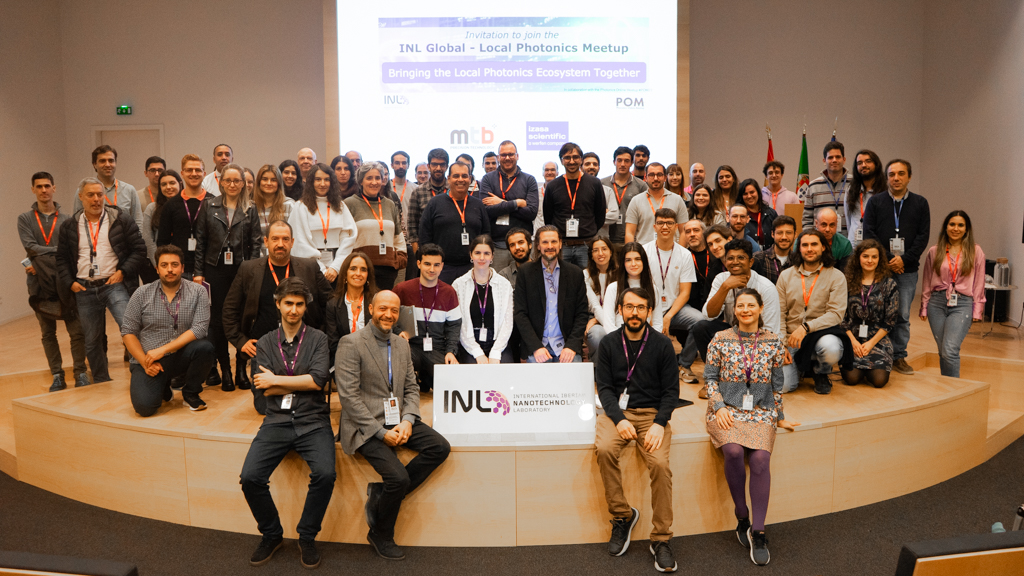
On November 13th and 14th, INL joined the global initiative Photonics Online Meetup (POM) as a POM-hub, bringing together 100 photonics enthusiasts from 24 organizations across Northwestern Iberia for two days of insightful discussions and engaging sessions. The conference was broadcast from the auditorium, while the lobby provided a platform for networking and socializing. The event was attended by representatives from various academic institutions, including the University of Minho, University of Porto, University of Aveiro, University of Vigo, University of Santiago de Compostela, University of Coimbra, University of Lisbon, FCT NOVA Lisbon, as well as representatives from local photonics-related industries and small and medium-sized enterprises (SMEs). There were 42 poster submissions, and the best poster prize included student registration for the conference AOP2024 and the opportunity to be featured in the program as an invited speaker, sponsored by the Sociedade Portuguesa de Óptica e Fotónica. This event was sponsored by MT Brandão Lda and Izasa Scientific.

Read more
1 10 11 12 13 14 54