News

INL Hosts Key Seminar on Critical Mineral Resources and Battery Value Chain

INL Hosts Key Seminar on Critical Mineral Resources and Battery Value Chain

On November 12, the International Iberian Nanotechnology Laboratory hosted a significant seminar titled “Critical Mineral Resources and the Battery Value Chain: Opportunities and Challenges for Portugal.” Organized by Battery Cluster Portugal and the Cluster Portugal Mineral Resources Association, the event attracted over 150 experts, industry representatives, and government officials. The gathering focused on Portugal’s strategic role in the battery sector and the vital mineral resources required for battery production, aiming to explore innovative strategies and address industry challenges. The session opened with remarks from Portugal’s Secretary of State for Energy, Professor Maria João Pereira, who emphasized the country’s commitment to advancing sustainable energy solutions. Dr. Joaquim Nunes de Almeida, Director of DG GROW at the European Commission, followed with an outline of the EU’s strategic guidelines for managing critical mineral resources, highlighting Europe’s efforts to secure these essential resources as the demand for batteries and renewable technologies grows. Throughout the day, panel discussions led by companies, academic institutions, and industry stakeholders delved into topics such as technological innovation, sustainability, and the integration of advanced materials into the battery supply chain. Moderated by leading universities, these sessions provided insights into the opportunities and challenges Portugal faces in building a resilient, sustainable […]

Read more
Sinfonia Project Concludes with a Resounding Success at the II ‘Total-Nanosafe’ International Conference in Braga

Sinfonia Project Concludes with a Resounding Success at the II ‘Total-Nanosafe’ International Conference in Braga

Braga recently hosted the closing event of the Sinfonia Project, where over 100 participants celebrated the successful culmination of a four-year journey dedicated to advancing nanosafety. The II ‘Total-Nanosafe’ International Conference served as the platform for this milestone, bringing together global experts to explore the intersection of nanotechnology, human health, and environmental impact. Pioneering Discussions in Nanosafety This year’s conference provided a comprehensive view of the latest nanosafety advancements, featuring discussions on nanotoxicology, organ-on-a-chip models, in vitro-in vivo bridging, in silico methods, and the environmental impact of nanomaterials. The event highlighted key trends shaping the future of nanosafety, underscoring a commitment to safe and sustainable nanotechnology development. Conference Highlights The conference opened with a welcome cocktail on November 6, followed by sessions on November 7 and 8. Professor Ulla Vogel from Denmark’s National Research Centre for the Working Environment delivered an impactful keynote on nanoparticle toxicology, focusing on occupational health risks related to nanoparticles, including cancer, cardiovascular disease, and fertility impacts. Presentations from INL and other leading institutions covered diverse research topics, such as the effects of silver nanoparticles on lung-barrier function, skin-on-chip safety models, and the impacts of black carbon on aging. These studies highlighted the scope of nanosafety […]

Read more
INL’s Commitment to Science Outreach: New Board Games Illuminate Nanosafety and Air Quality Awareness for Young Audiences

INL’s Commitment to Science Outreach: New Board Games Illuminate Nanosafety and Air Quality Awareness for Young Audiences

INL – The International Iberian Nanotechnology Laboratory continues to champion science outreach and education by introducing two innovative board games: The Life Cycle of Nanomaterials and Clean Air in School! Play & LEARN. These games, developed through INL’s projects—SiNfONiA, LEARN, and SbDToolbox—reflect INL’s enduring commitment to bridging the gap between complex scientific research and accessible learning for younger audiences and by it’s commitment to science outreach by illuminating nano safety and air quality awareness for young audiences. These games embody INL’s goal of making science both engaging and educational, fostering a new generation’s awareness of environmental safety, health, and nanotechnology’s impact on daily life. Through these immersive tools, INL emphasises that scientific understanding is not only the domain of researchers but also a vital area of knowledge for the broader community. “The Life Cycle of Nanomaterials“, Bringing Awareness of Materials’ Lifetime Supported solely by INL through the SiNfONiA and SbDToolbox projects, The Life Cycle of Nanomaterials board game provides players with a comprehensive understanding of nanomaterials’ journey from creation to potential environmental and health impacts. SiNfONiA, spearheaded by the Alfaro-Moreno Group, is dedicated to advancing research in nanosafety and enhancing INL’s capabilities in this field. In parallel, the SbDToolbox project addresses the critical need for […]

Read more
Stamp-sized microchip that imitates the human brain could speed up treatments for Alzheimer’s [republished]

Stamp-sized microchip that imitates the human brain could speed up treatments for Alzheimer’s [republished]

A human brain-on-a-chip sounds like something from a science fiction film, a gadget powering its cyborg villain.  Discover how INL’s innovative stamp-sized microchip is transforming healthcare and data security. Learn about this ultra-small technology and its impact on future applications. Chemical and biological engineer Dr Raquel Rodrigues at the INL – International Iberian Nanotechnology Laboratory (INL) in Braga, Portugal, believes that such a device will be key to developing more effective treatments for serious neurological disorders, such as Alzheimer’s. “The brain is a very complex and puzzling organ,” said Rodrigues. “We need electronic monitoring of cells and experimental parts so we can learn how it works.” Your brain on a chip Thanks to research funding from the EU, Rodrigues and fellow researchers at the INL were able to build a unique brain-emulating microchip as part of a two-year research effort called BrainChip4MED that concluded in February 2024. The research included a 12-month secondment to Brigham and Women’s Hospital, part of Harvard Medical School and pioneers in the development of organs-on-a-chip (OoC) and biosensors. The ingenious, thumbnail-sized device developed by the researchers looks similar to chips in computers or smartphones, but is much more complex.  “ The brain is a very complex and […]

Read more
ERN 2024 Brings Science to Life for Nearly 1,400 Participants in Braga

ERN 2024 Brings Science to Life for Nearly 1,400 Participants in Braga

On September 27, 2024, nearly 1,400 participants gathered in Braga for the European Researchers’ Night (ERN), under the theme Science for Global Challenges. The event showcased cutting-edge research and demonstrated how science addresses critical global issues like environmental protection, economic development, and social justice. INL – International Iberian Nanotechnology Laboratory, committed to outreach and bringing science closer to the public, actively participated with European funded projects such as LEARN, FRONTSH1P, Forging, and 3DSecret. Attendees enjoyed interactive experiences, including optical experiments revealing the colors of white light, engaging science-themed board games, and an immersive exploration of extracellular vesicles. João Martinho Moura’s multimedia performance micromacronanooffered a unique blend of art and science, illustrating the connection between the smallest particles and the vastness of the universe. The Consortium: A National Collaboration ERN 2024 was powered by a national consortium. INL and the University of Minho led efforts in Braga, while the University of Coimbra, University of Lisbon, Universidade Nova, ISCTE, and the University of Évora ensured the event reached communities across Coimbra, Lisbon, and Alentejo, making science accessible throughout the country. + A day to remember. See the full photo gallery here >>

Read more
INL recognised as “key innovator” in cutting-edge spintronics technology by EC Innovation Radar

INL recognised as “key innovator” in cutting-edge spintronics technology by EC Innovation Radar

The work developed by the International Iberian Nanotechnology Laboratory within the EU-funded project RadioSpin was recently highlighted on the European Commission’s Innovation Radar for its significant potential. The important milestone is the result of the joint effort by INL and two consortium partners – Thales and CNRS (Centre National de la Recherche Scientifique) – in the development of RF-mode MTJ stacks and devices optimised for neuromorphic computing and sensing. This breakthrough technology, which mimics brain-like computing, is set to transform fields like neuromorphic computing and advanced sensing. The Innovation: A Game-Changer in Neuromorphic Computing and Sensing The innovation centres on Magnetic Tunnel Junction (MTJ) stacks in radio frequency (RF) mode. These optimised MTJ devices offer potential breakthroughs in neuromorphic computing—a field inspired by biological neural networks, aimed at more efficient, brain-like computing. Additionally, their sensing capabilities could significantly enhance various high-tech applications, from telecommunication to smart sensors, benefiting a wide range of industries such as IoT, AI, and healthcare. The Innovation Radar analysis identifies this technology as having great market potential. RadioSpin focuses on developing spintronic devices that operate at high frequencies, offering innovative telecommunications and neuromorphic computing solutions. Spintronics is a technology that exploits the intrinsic spin of electrons […]

Read more
Advanced electron microscopy to investigate magnetic layered materials

Advanced electron microscopy to investigate magnetic layered materials

In a recent study published in Nature Communications, INL researchers Loukya Boddapati and Francis Leonard Deepak, along with an international team from Korea, Spain, the U.S., and the U.K., used cutting-edge electron microscopy, including low-temperature Cryo-TEM, to explore the structural phase transitions of CrI₃. CrI₃ is a novel magnetic material which has attracted significant attention for its unique ferromagnetic properties and potential applications in spintronics. The stacking configurations in van der Waals crystals significantly influence several material properties. Previous research has shown that stacking engineering is a powerful method for achieving desired properties through layer-by-layer crystal engineering. Controlling the twist angle between artificially stacked two-dimensional (2D) materials has led to the discovery of unconventional phenomena, ranging from superconductivity to strongly correlated magnetism. This study clarifies the complex relationship between these transitions and the material’s magnetic properties. In this study, cross-sectional TEM analysis was used to identify interlayer stacking disorders in CrI3. According to Francis Leonard Deepak, “the study provides evidence of twisted stacking faults in CrI₃ and reveals changes in the relative population of twisted domains, without the anticipated transition to the rhombohedral phase at low temperatures”. “These findings underscore the importance of understanding layer-dependent stacking order and magnetic properties […]

Read more
Researchers achieve quantum breakthrough with novel quantum-to-quantum Bernoulli factory design

Researchers achieve quantum breakthrough with novel quantum-to-quantum Bernoulli factory design

Unlike classical computers, which use bits to process information as either 0s or 1s, quantum computers use quantum bits, also known as qubits, which can represent and process both 0 and 1 simultaneously thanks to a quantum property called superposition. This fundamental difference gives quantum computers the potential to solve some complex problems much more efficiently than classical computers. INL researcher Ernesto Galvão, in collaboration with Sapienza Università di Roma (Rome) and Istituto di Fotonica e Nanotecnologie (Milan), recently published a groundbreaking study in the journal Science Advances, where they describe a new set-up for a quantum-to-quantum Bernoulli factory. A Bernoulli factory is a method to manipulate randomness, using as inputs random coin flips with a certain probability distribution, and outputting coin flips with a different, desired distribution. Let us imagine we have a coin that lands on heads with some unknown probability. Now, we want to create a new coin that lands on heads with a different probability, possibly described by a function of the initial probability. The Bernoulli factory is an ingenious way to flip our original coin multiple times and use the different outcomes to simulate the new coin with the desired probability. Ernesto Galvão adds “This […]

Read more
Filipa Lebre: Exploring the Frontier of Nanosafety

Filipa Lebre: Exploring the Frontier of Nanosafety

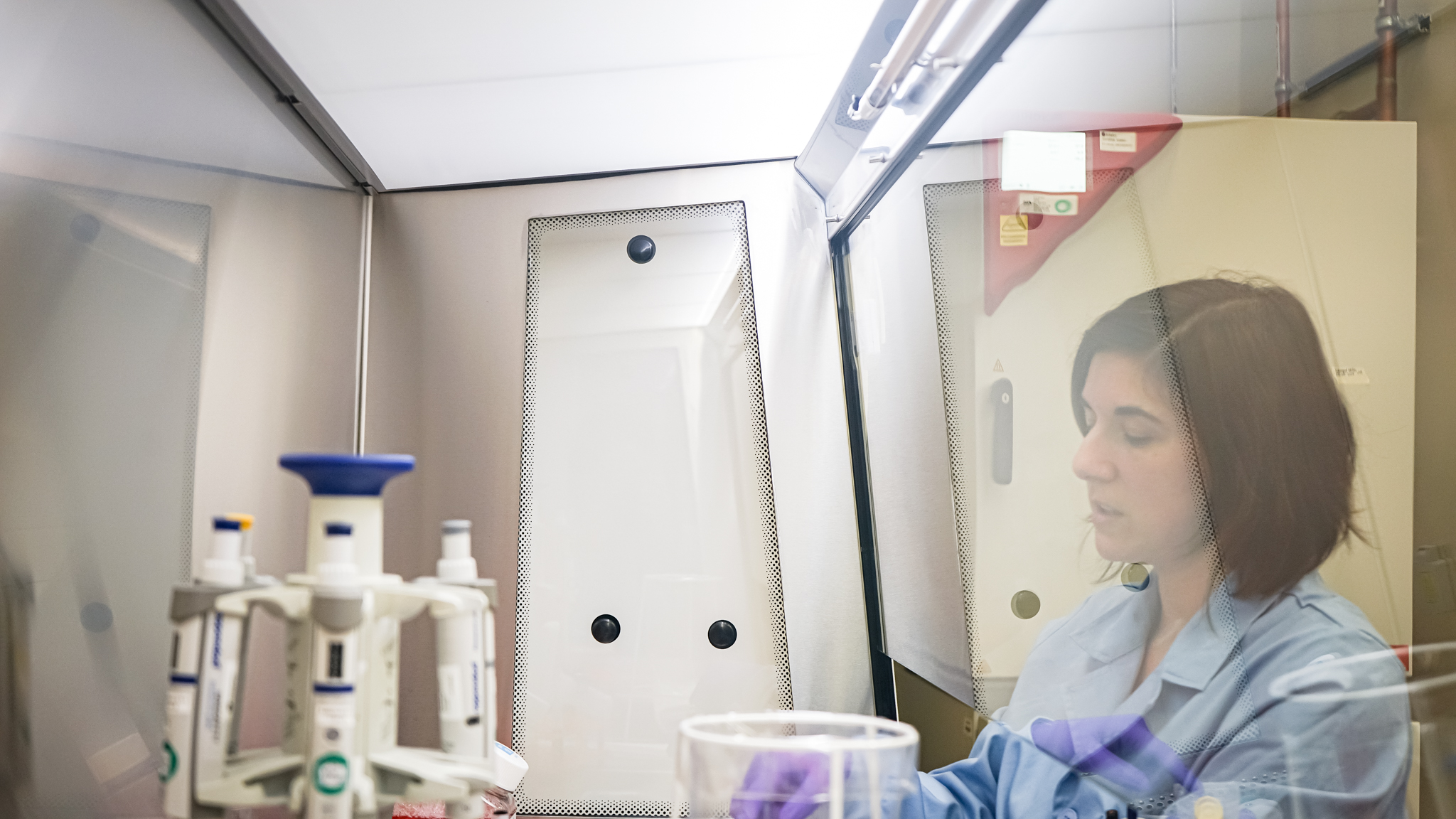
Filipa Lebre is a Research Fellow in the Nanosafety Research Group at INL, and her research focuses on the complex interactions among the immunological system and different organs, using novel technologies and in-house developed systems. Filipa has a background in Pharmaceutical Sciences and holds a PhD in Pharmaceutical Technology from the Faculty of Pharmacy, University of Coimbra, focused on the development and optimization of a polymeric nasal vaccine against hepatitis B to be used for mass immunization. She moved to Ireland during her postdoc to conduct her research at the interface between biomaterial and immunology, studying key aspects of immunomodulation by a relevant spectrum of materials with applicability in the regenerative medicine field. Could you share with us your professional trajectory and what inspired you to embark on a career in nanosafety? I’m very curious by nature and always had this passion and interest in science. When I did my degree in Pharmaceutical Science, I was fortunate enough to find a teacher who was working in the vaccine field and made me realize how I could use my passion to impact millions of lives. That was when I started to work with nanoformulations. I obtained my PhD in formulation development, […]

Read more
1 2 3 4 5 6 32