News

Can we cut the energy consumption of current AI technologies?

Can we cut the energy consumption of current AI technologies?

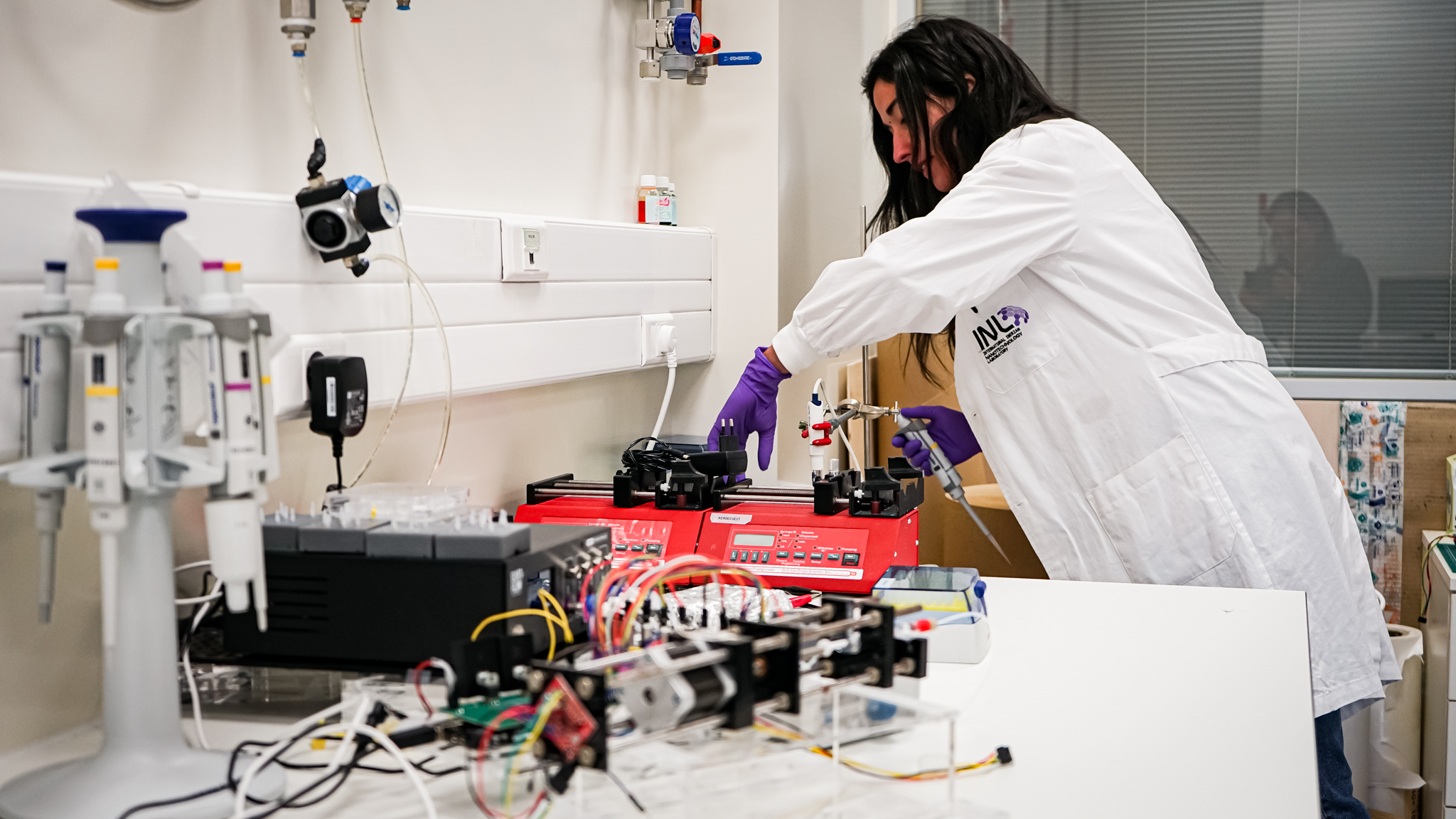
As artificial intelligence, commonly referred to as AI, becomes increasingly integrated into various aspects of our daily lives, the energy demands of AI systems continue to rise. Despite AI being inspired by the human brain, it is significantly less energy efficient because most tasks are implemented on computer hardware that is not specifically tailored for this purpose. The human brain remains an exemplar of energy-efficient computation, a standard that modern technology strives to replicate. INL researchers are studying advanced materials and devices aimed at revolutionising AI systems. Carlos Rosário, ERA fellow at INL (Marie Skłodowska-Curie actions (MSCA)), focuses his research on reducing the substantial energy consumption required by current AI technologies. Carlos’ work is grounded in the field of neuromorphic computing, which seeks to mimic the brain’s intricate network of neurons and synapses using artificial equivalents. The goal is to create an electronic brain capable of performing complex computations with minimal energy use. One of the key areas of Carlos Rosário’s research is the exploration of 3D topological insulators for novel electronic devices. These cutting-edge materials exhibit unique properties: while they are insulators and do not conduct electricity through their bulk, their surfaces behave like metals, allowing for efficient electrical […]

Read more
Secretary of State for Science Visits INL, Showcasing Key Projects and Innovations

Secretary of State for Science Visits INL, Showcasing Key Projects and Innovations

Prof. Dr Ana Paiva, Secretary of State for Science, visited INL – International Iberian Nanotechnology Laboratory today. This visit provided an exceptional platform for INL to present its ongoing projects and significant achievements in the field of science and technology. The presence of Prof. Dr. Paiva underscored the crucial role of INL’s work and its far-reaching impact on the broader scientific community. Prof. Dr. Clivia M. Sotomayor Torres, INL Director-General, welcomed Prof. Dr Paiva and provided an insightful overview of INL’s mission and accomplishments. This introduction set the stage for a series of detailed presentations and discussions that highlighted INL’s prominence in both the national and European research landscapes. Presentation Highlights: Secretary of State’s visit to INL was a testament to the laboratory’s dedication to innovation, excellence, and its significant contributions to the field of science and technology. This visit not only highlighted INL’s achievements but also reinforced the importance of continued support and investment in scientific research and development. Text and Photography by Gina Palha

Read more
Breakthrough technology for cancer diagnostics

Breakthrough technology for cancer diagnostics

INL researchers are part of the consortium behind BIOCELLPHE, a pioneering project focused on advancing cancer diagnostics and personalised medicine. This innovative European-funded project is at the forefront of scientific and technological innovation, introducing a groundbreaking technology for identifying proteins as diagnostic biomarkers at the single-cell level. This new approach offers multiplexing capabilities, portability and enhanced sensitivity. Alexandra Teixeira, research fellow at the Medical Devices group, highlights that “BIOCELLPHE is pioneering the use of engineered bacteria to recognise and bind with high specificity to protein targets on the surface of circulating tumour cells, or CTCs, which are key players in cancer metastasis.” This specific binding of engineered bacteria to CTCs subsequently triggers the production of molecules (Raman reporters), which can be detectable with high sensitivity using surface-enhanced Raman scattering (SERS). More specifically, SERS uses plasmonic nanoparticles to enhance Raman signals, allowing ultrasensitive analysis and detection at the single molecule level. The pathological role of CTCs in cancer metastasis is not completely understood due to the lack of effective analytical tools and remains an area that needs further exploration. BIOCELLPHE addresses this gap by developing new tools for the phenotypic identification of CTCs at the single-cell level, with high-throughput and multiplexing […]

Read more
A miniaturised model of human digestion to advance therapies and nutritional products

A miniaturised model of human digestion to advance therapies and nutritional products

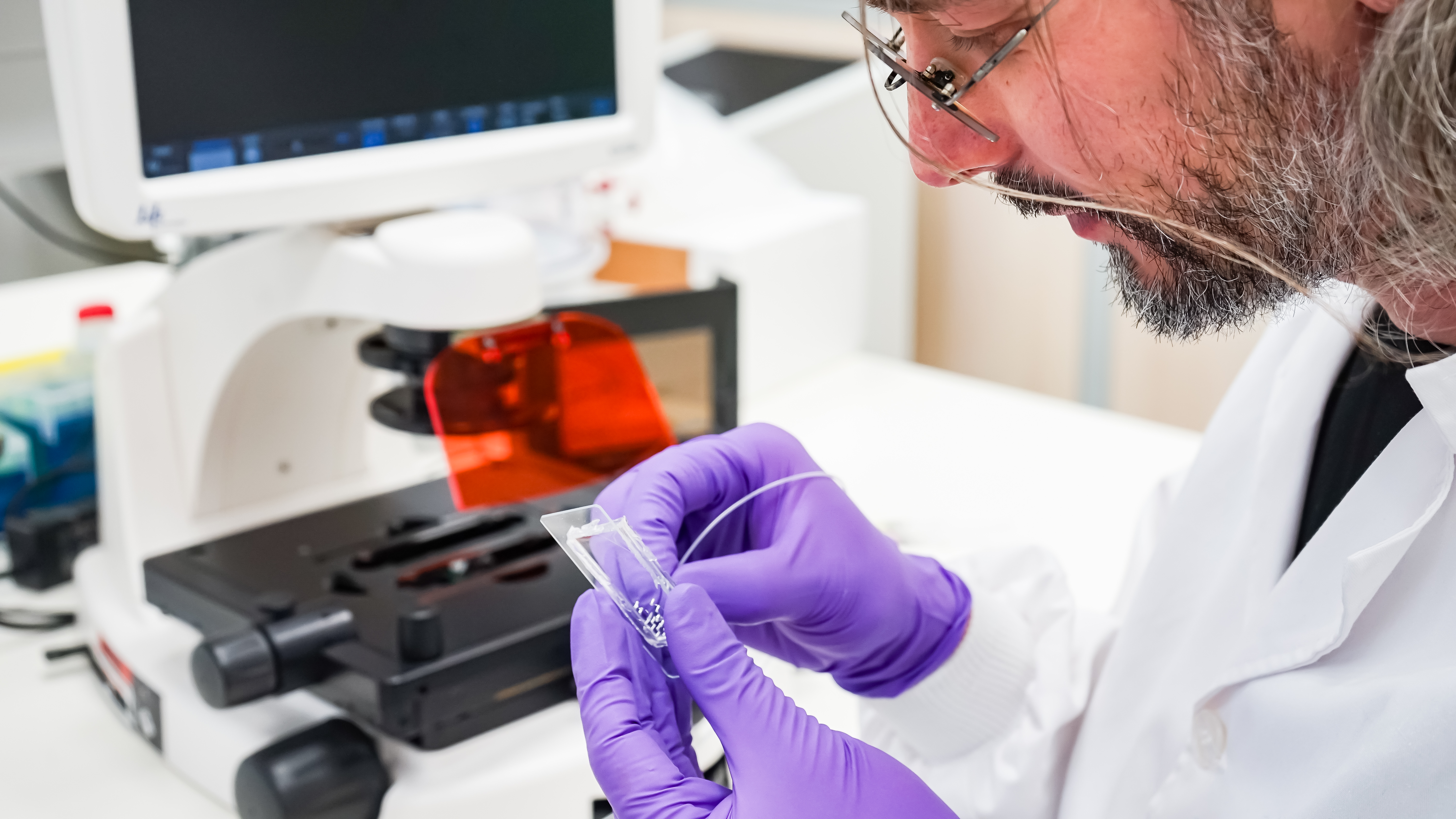
INL researchers have made a significant breakthrough in the development of reliable in-vitro digestion models. This ‘digestion-chip’ promises to revolutionise the way new oral formulations are tested, offering a more accurate, efficient, and cost-effective alternative to current models. Traditional in-vitro digestion models often fail to replicate the complex dynamics of the human gastrointestinal tract. They either lack critical digestive processes or require large volumes of samples and reagents, which can be challenging when dealing with nanomaterials. The INL’s innovative ‘digestion-chip’ addresses these limitations with its miniaturised design and advanced features. The coordinator of the study Catarina Gonçalves explains, “the Food Processing and Nutrition research group proposes a miniaturised digestion system based on incubation chambers integrated into a polymethylmethacrylate device. This solution incorporates key dynamic features of human digestion while maintaining low complexity and using small volumes of samples and reagents”. The digestion-chip features gradual acidification (the stepwise addition of enzymes and simulated fluids during the gastric phase) and controlled gastric emptying. These capabilities are essential for replicating the intricate environment of the human stomach and intestines. The research team’s experimental results indicate that “the ‘digestion-chip’ successfully replicates the established static digestion INFOGEST protocol”. Moreover, “the semi-dynamic digestion kinetics observed with […]

Read more
Innovative graphene oxide sensor detects low concentrations of nitrate in water

Innovative graphene oxide sensor detects low concentrations of nitrate in water

A new study published in the Chemosensors journal introduces a novel approach to nitrate ion detection using all-solid-state ion-selective electrodes enabled by graphene oxide as an ion-to-electron transducer. Nitrate ions play a critical role in the nitrogen cycle in natural ecosystems, such as in soils and aquatic environments. However, their levels have dramatically increased due to modern agricultural practices. The excessive use of inorganic fertilizers has led to high concentrations of nitrate in surface and groundwater, posing significant environmental and health risks. Eutrophication, which is a phenomenon caused by nutrient overload in water bodies, results in uncontrolled algae growth, oxygen depletion, and poor water quality. This negatively impacts biodiversity, fisheries, and recreational activities. Moreover, if nitrate concentration exceeds a certain level (the value established by the European Union is 50mg/L), water may become unsuitable for consumption, potentially leading to severe health issues such as colorectal cancer and thyroid disease. INL researchers have developed an innovative sensor that can robustly detect low concentrations of nitrate in water. Despite being effective, traditional methods for nitrate detection are time-consuming and expensive. Electrochemical sensors offer a promising alternative due to their simplicity, cost-effectiveness, and rapid response time – particularly potentiometric ion-selective electrodes. However, early […]

Read more
INL advances nanotechnology for Smart City future

INL advances nanotechnology for Smart City future

This year at the Open Day, more than 1000 visitors had the chance to discover the new demonstrator ‘Smart City’, showcasing a fusion of advanced nanotechnologies developed at INL. ‘Smart City’ not only highlights INL’s research and development in nanotechnology but also exemplifies the potential of these technologies to foster smart, sustainable urban environments. At the heart of this demonstrator are MEMS, or Micro-Electromechanical Systems. These small, integrated devices combine electrical and mechanical components to perform functions such as sensing, controlling, and actuating on a micro-scale. They can produce or sense micro-motion or micro-forces, making them indispensable in sectors ranging from automotive and medical to telecommunications and electronics. The transformative potential of MEMS lies in their ability to significantly alter how humans interact with technology and their surroundings. At the core of this ‘Smart City’ is the Sensible Car project, which highlights the development of intelligent sensors essential for autonomous driving. These sensors enable comprehensive perception of surroundings, real-time precise location updates, and flawless action execution. INL’s contribution to this project includes the creation of two-dimensional MEMS mirrors, diffractive optical elements, tuneable filters, and lenses, all integrated into a LiDAR system. LiDAR, or Light Detection and Ranging, measures distances by […]

Read more
INL researchers are integrating light and AI to advance nanotechnology

INL researchers are integrating light and AI to advance nanotechnology

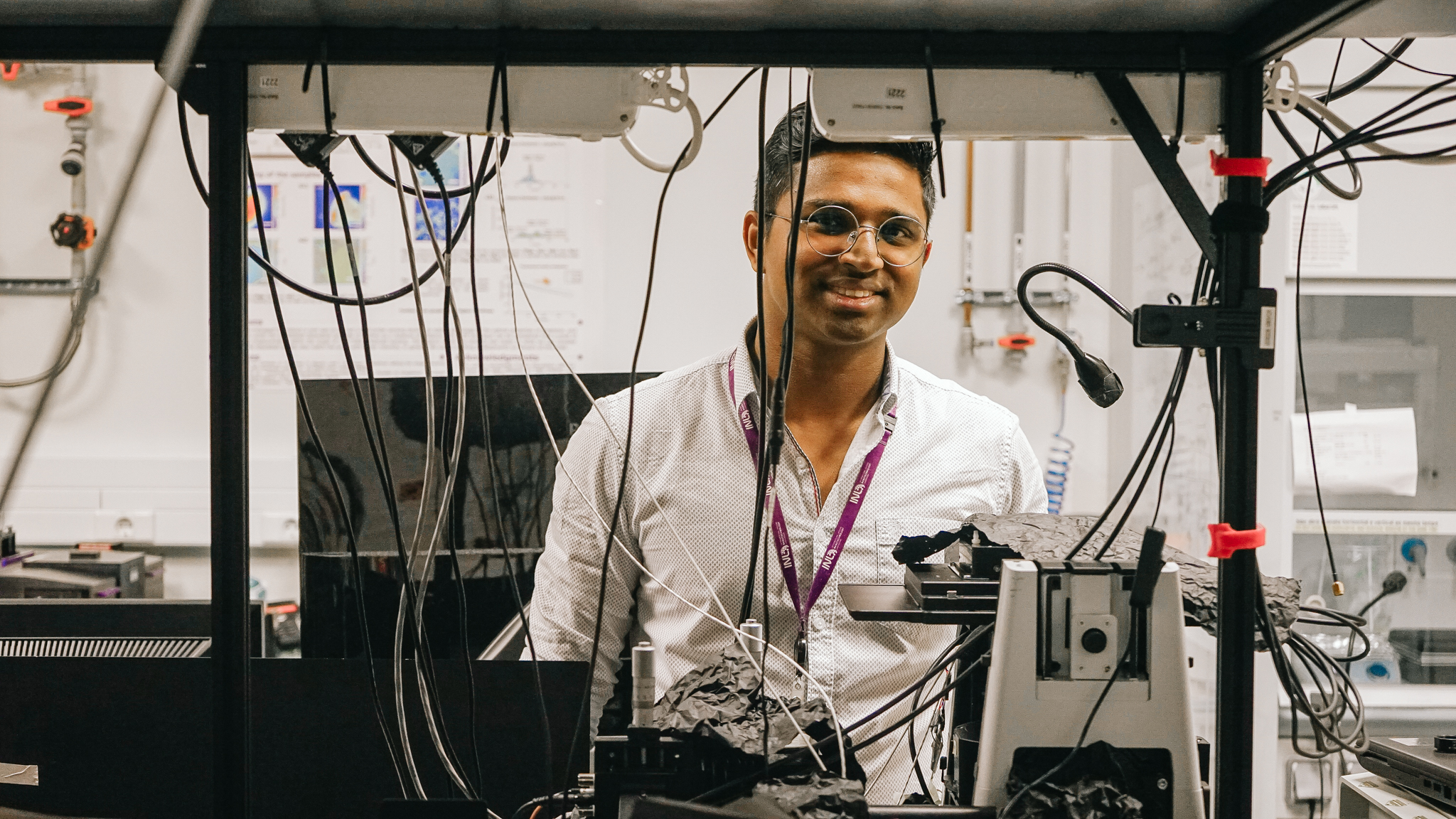
‘What if the brains of future robots are powered by light?’ This was one of the questions INL researcher Bejoys Jacob has been trying to answer during the past years at INL. As artificial intelligence, also known as AI, continues to revolutionise society, scientists are exploring innovative ways to power the brains of future robots. Traditional computer architectures, such as the von Neumann architecture, demand substantial energy consumption to execute AI algorithms. In light of the increasing demand for AI tools and the global push for sustainable energy solutions, researchers are seeking alternative computational architectures inspired by the human brain. At INL, the focus has been on developing a revolutionary architecture powered by light. This ambitious project involves the creation of miniaturised light sources, detectors, and photonic interconnects for a novel photonic integrated circuit architecture. As part of this initiative, Bejoys, who is pursuing a PhD at INL, in the Ultrafast Bio- and Nanophotonics group, in collaboration with Charles III University of Madrid (UC3M), is developing nano- and micro-LEDs based on GaAs III-V semiconductor materials. These LEDs mimic neuronal activity through optical/electrical signals, paving the way for advanced brain-inspired computational architectures. Bejoys explains that “the devices developed through this research […]

Read more
INL researchers awarded funding to develop an automated sensor to detect emerging viruses

INL researchers awarded funding to develop an automated sensor to detect emerging viruses

Zoonotic infectious diseases, i.e. diseases that transmit from animals to humans, are on the rise, and the potential for a new pandemic is more significant than ever. It is imperative to develop advanced technologies capable of continuous monitoring to identify high-risk zones for pathogen transmission between animals and humans. This requirement is essential to mitigate the potential human, socio-political, and economic impact of pandemics. The global initiative ‘One Health’ advocates collaboration among human, animal, and environmental health professionals to address health challenges. Its goal is to comprehend and prevent zoonotic diseases, while fostering a holistic approach to global health. Although the European Parliament calls for continuous surveillance and harmonised data collection from animal farms, current practices fall short for continuous and automatic detection, limiting detection to specific and already known pathogens. FLUFET, which stands for ‘FLow detection of virUses by graphene Field Effect Transistor microarrays’, is the new EIC Pathfinder project with a goal to develop a novel approach for the detection of viruses. It will be the first automated sensor capable of continuously detecting a broad spectrum of viral targets, including unknown viruses. This revolutionary sensor, combining technologies and knowledge from different fields, such as graphene field effect transistors […]

Read more
A microfluidic platform that simulates human digestion

A microfluidic platform that simulates human digestion

In a recently published study, INL researchers developed an innovative microfluidic platform that is capable of replicating key human gastrointestinal processes, offering a game-changing tool for the assessment of newly-developed drugs and/or food supplements. The innovation combines a ‘Digestion-Chip’ and a ‘Gut-Chip’, each enabling sequentially the simulation of digestion through the gastrointestinal tract and the evaluation of intestinal permeability. The study ‘From mouth to gut: microfluidic in vitro simulation of human gastro-intestinal digestion and intestinal permeability’, introduces a miniaturised setup that allows studies of sample bioaccessibility and simplified bioavailability using minimal sample amounts. In addition, the outflow from the ‘Digestion-chip’ can be exposed to the cell-based Gut-Chip, which replicates the intestinal epithelium, using unprecedentedly low sample dilutions thus allowing the detection of ‘rare’ compounds. Both devices work in continuous flow requiring very little user interfacing. In this work, casein – a milk protein that is widely used as a supplement in sports nutrition – was tested as a model compound. And critically, the Gut-Chip can be used to evaluate intestinal permeability offering reference permeability values that are in line to those found using human ex vivo models. Miguel Xavier, one of the first authors of the research study adds “the […]

Read more
1 3 4 5 6 7 32