News

INL researchers developed an autonomous monitoring system for grape ripening

INL researchers developed an autonomous monitoring system for grape ripening

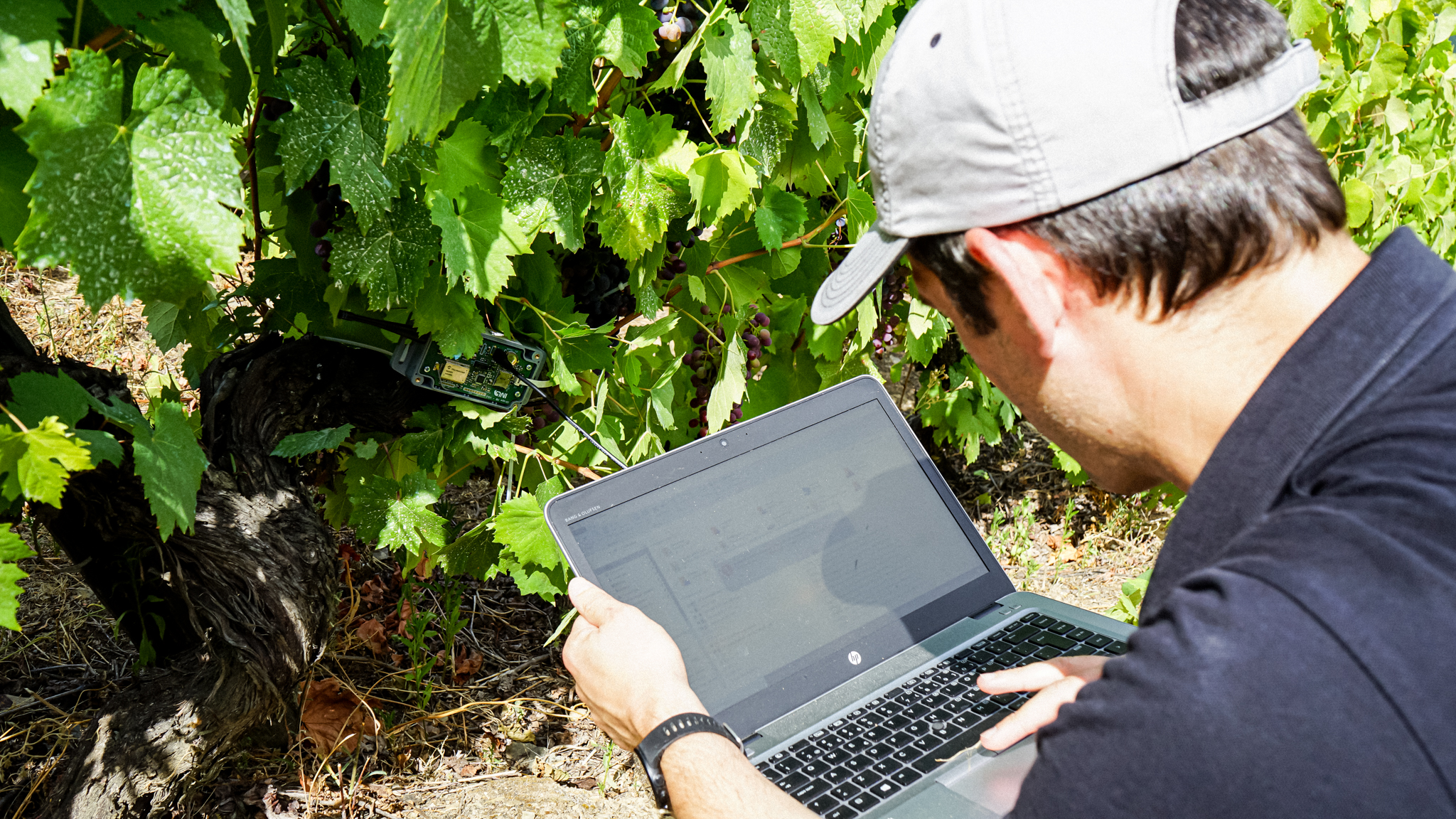
INL researchers have published a new study describing a novel prototype of a stand-alone system designed to autonomously collect grape ripening measurements. Climate change and the rapid transformation of economic value chains are driving the need for advanced decision-support systems in viticulture. The traditional method of monitoring grape maturation involves manual sampling and lab assays, but there’s a shift towards using optical techniques in agriculture. The Internet of Things (IoT) plays a key role in agriculture by connecting sensors, networks, and data processing. IoT is also one of the main drivers of precision viticulture, where the combination of multiple data sources can create complex tools for monitoring the vineyard. Hugo Oliveira, the main author of this study, explains “this IoT application involves using simplified spectral sensors to monitor grape ripening in real-time, providing analytical information about the grapes’ status. This work established the technology ground to achieve this objective”. The research work developed by INL researchers of the Systems Engineering and the Nanodevices groups, in collaboration with University of Milano, IMTEK, Sogrape, INESC-MN, and Automation, introduces a novel prototype of a stand-alone system which uses simplified spectral sensing to autonomously collect reflectance measurements directly from grape bunches. The system comprises […]

Read more
Exploring nanotechnology for the health of intestinal microbiota

Exploring nanotechnology for the health of intestinal microbiota

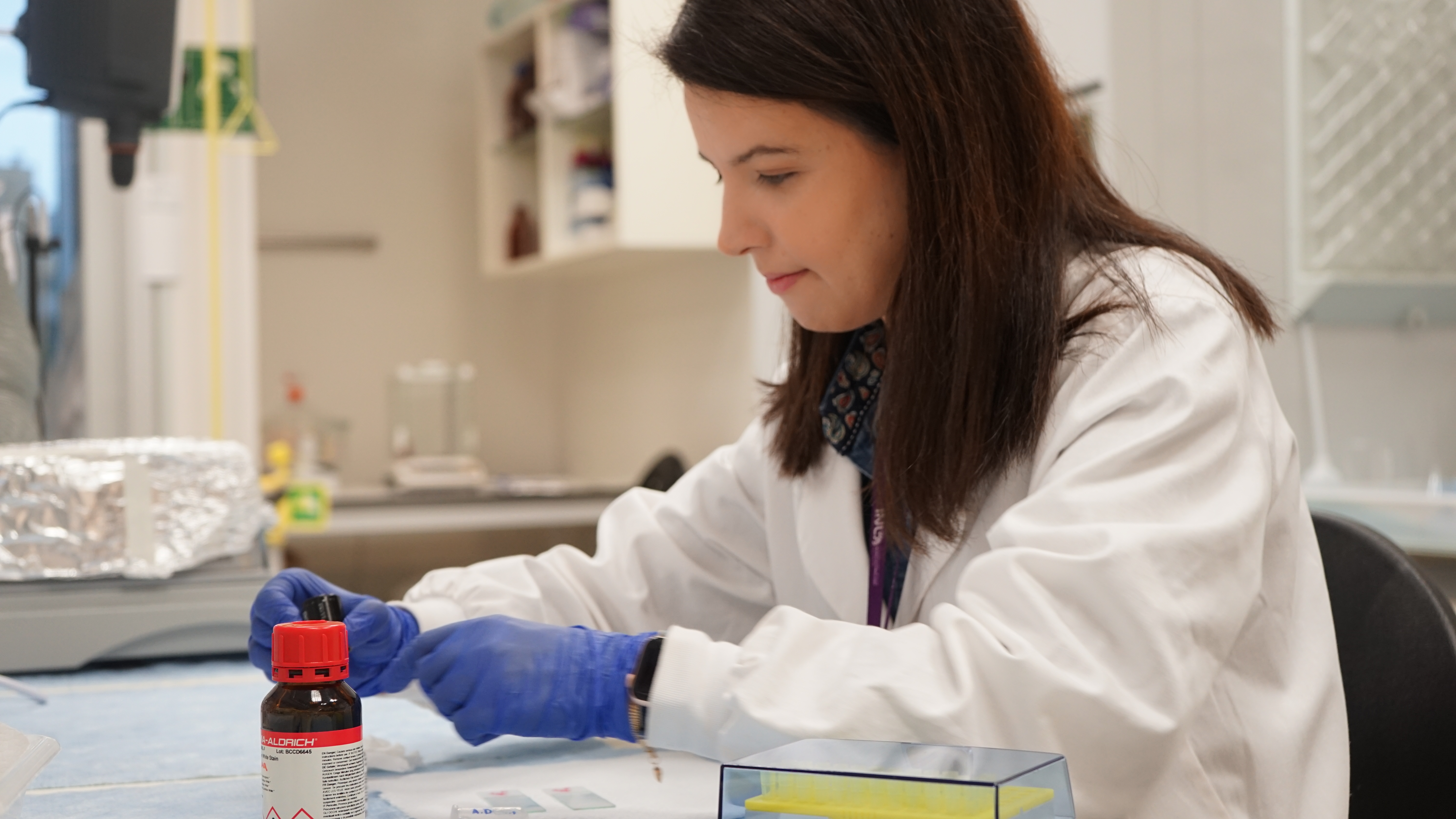
Researchers at INL are using nanotechnology to develop functional foods that can be consumed by people with food intolerances and allergies. Ana Isabel Bourbon, from the Food Processing and Nutrition research group, explains: “Our society is increasingly changing its eating habits and this has several effects on the intestinal microflora. When eating daily, people are subjected to increasing amounts of different compounds. This promotes microbial changes over the years, which causes diseases that previously did not exist, such as intolerances and allergies, to appear. Trying to understand how we can reduce these intolerances in the future is one of our group’s objectives”. In this context, INL researchers are creating foods with added nutritional value using nanotechnology. The team develops nanostructures enabling the encapsulation and incorporation of active compounds, such as vitamins and antioxidants. The goal is to ensure that, after ingestion, these compounds reach the bloodstream in sufficient quantities to have a positive impact on the consumer. However, obtaining information about the behaviour of these nanostructures during digestion and their effects on intestinal health poses a challenge. The Healthy-Gut project aims to address this gap by evaluating the behaviour of encapsulated systems using in vitro cell models. These models mimic […]

Read more
Nanotechnology uncovering the hidden secrets of cancer

Nanotechnology uncovering the hidden secrets of cancer

Metastasis, the spreading of cancer cells to other parts of the body, contributes to 9 out of 10 cancer-related deaths. However, the intricate mechanisms triggering this process remain a mystery. 3DSecret is on a mission to change that. The European consortium 3DSecret, coordinated by INL researchers from the Medical Devices research group, is approaching metastasis in a new way, focusing on single cells and aiming to uncover hidden patterns that can predict and forecast how cancer spreads. “By studying individual circulating tumour cells, or CTCs, 3DSecret hopes to transform how cancer is diagnosed and/or treated, making significant strides in clinical sciences”, says Miguel Xavier, technical coordinator of the 3DSecret project. In response to this challenge, 3DSecret has outlined specific objectives. At the forefront is the development of the ‘3Dsecret-chip,’ a sophisticated tool designed to facilitate the controlled creation of 3D cancer cell models from individual cells. This innovative approach promises reproducibility and precision, enhancing one’s ability to examine the details of cancer cell behaviour. Furthermore, 3DSecret is incorporating ‘SERS metabolomics profiling’, an advanced technology providing continuous insights into the growth kinetics of these 3D cancer cell models. Sara Abalde-Cela, leader of the Medical Devices research group and coordinator of the […]

Read more
Looking inside a solar cell

Looking inside a solar cell

In a ground-breaking study published in Nature Energy, researchers from the Nanostructured Solar Cells group have unveiled critical insights into the optimisation of thin-film solar cells, shedding light on methods to enhance their efficiency and pave the way for more cost-effective electricity generation. Photovoltaic power conversion utilising polycrystalline light-absorbing semiconductors has long been recognised for its potential to revolutionise solar energy. Among these technologies, polycrystalline CIGS (copper indium gallium selenide) stands out as a high-performing option, and recent advances have propelled its efficiency even further through an alkali-fluoride post-deposition treatment, which elevates the charge-carrier concentration. However, the team led by Sascha Sadewasser discovered a previously overlooked challenge in the application of this treatment – inhomogeneities in the conductivity of individual material grains, which they trace back to the charge-carrier concentration. This revelation has significant implications for the efficiency of solar cells and their overall performance. Using an emerging conductive atomic force microscopy tomography technique, the research team at INL literally scratched away material layer by layer, generating three-dimensional conductivity maps. A detailed analysis of these maps provided for a sub-micrometre scale visualisation of the carrier concentration grain by grain, allowing for a detailed look into the inside of the solar […]

Read more
Wrapping Up 2023: Research

Wrapping Up 2023: Research

2023 has been a busy year for the INL Community. This week we take a look at some of this year’s highlights and achievements regarding our projects, and the latest research developments. Even with all the changes, INL persisted in performing interdisciplinary research and deploying and articulating nanotechnology for the benefit of society addressing society’s grand challenges.  Here’s a comprehensive wrap-up of the key moments that defined the past 12 months. INL inaugurates state-of-the-art Cryo-Electron Microscope that helps to study new diseases Analysing biostructures down to the atomic level can help to study diseases such as Alzheimer’s or cancer, as well as to develop new therapies. This new type of investigation is now possible from Braga, thanks to the new electronic cryogenic microscope installed at INL – International Iberian Nanotechnology Laboratory. The acquisition of this equipment is part of the creation of the CryoEM-PT National Network, “an electron microscopy network for life and health sciences”, explains Paulo Ferreira, scientific coordinator of this initiative that opens doors to researchers and companies in Iberia, allowing easy access to state-of-the-art infrastructure and technologies. Read the full update >> ATLANTICLAM, brings Euro-native clam species from ‘farm to fork’ INL – International Iberian Nanotechnology Laboratory […]

Read more
Solar energy solutions inspired by nature

Solar energy solutions inspired by nature

ADAPTATION is the new European-funded project, which involves collaborative efforts from Spain and Portugal. This Iberian consortium combines the scientific expertise from INL, Consejo Superior de Investigaciones Científicas (CSIC), University of Minho, and University of Vigo. ADAPTATION draws inspiration from nature, more precisely from photosynthesis. The project aims to develop an innovative technology to absorb solar energy for electricity generation while incorporating self-cooling capabilities to mitigate energy losses. Sara Núñez-Sánchez, researcher at the University of Minho and coordinator of the project, explains that “the survival of plants does not depend so much on the amount of energy they absorb but on how efficiently they transport that energy”. This mechanism is what the ADAPTATION project aims to mimic, creating a new concept for a solar energy conversion device. The efficiency of devices that convert energy into electricity, such as solar panels, tends to decrease as heat accumulates. “The integration of photovoltaic or solar energy capture technologies is incompatible with technologies that allow efficient temperature management”, says Pedro David García, a researcher at ICMM-CSIC. The Iberian team will focus on mimicking, at the molecular level, how natural photosynthetic tissues are organised to generate new materials at the nanoscale. “All the structures we […]

Read more
Understanding quantum entanglement

Understanding quantum entanglement

INL researchers have recently published a scientific paper describing a new method to confirm the presence of quantum entanglement. Similar to electricity and magnetism, quantum entanglement is a natural phenomenon that plays a central role in the most fascinating aspects of quantum mechanics. Quantum entanglement is a peculiar and counterintuitive occurrence that describes the intricate connection between two subatomic particles, even when they are separated by large distances. Any alteration made to one of these particles will instantaneously impact the other, defying the conventional expectation that distance should limit such influences. The idea that quantum entanglement can be used as a resource is fundamental to fields like quantum computing, quantum sensing, and quantum communications. To make use of quantum entanglement, it is crucial to develop tools for investigating it, which can be particularly challenging at the nanoscale. INL researchers have recently described a new technique to identify quantum entanglement, by using state-of-the-art equipment – electron spin resonance using scanning tunnelling microscopy (STM). Joaquín Fernández-Rossier, Theory of Quantum Nanostructures research group leader, says that “our proposal adds a completely new functionality to STM, establishing a connection between quantum information and surface science”. This work was supported by the Quantum Portugal Initiative […]

Read more
Enhancing nutrition for older adults through nanotechnology

Enhancing nutrition for older adults through nanotechnology

Aging often brings challenges such as alterations in taste, smell, chewing, and swallowing, leading to insufficient eating and malnutrition. To address these issues, INL scientists are actively developing advanced technologies for food fortification and customised textures, aiming to promote a more balanced diet for seniors. A particularly promising strategy involves the creation of personalised foods to meet the unique nutritional needs of the elderly. Arlete Marques, a PhD fellow supported by FCT, is developing her research in collaboration with INL and the Centre of Biological Engineering at the University of Minho. Arlete emphasises that “this approach not only ensures that seniors meet their nutritional requirements but also aligns with their individual preferences”. One aspect of this research focuses on crafting an alternative protein-based meat-like product tailored for older individuals with swallowing difficulties. The INL Food Processing and Nutrition research group explores nanotechnology to enrich the food with iron and folic acid. The group has developed micro and nanoparticles that can lead to a better absorption of the micronutrients in the digestive system. In terms of food texture, the team is working with Aspergillus oryzae, a filamentous fungus that is widely used in food fermentation, particularly in Asian countries. Aspergillus oryzae […]

Read more
Solar-powered textiles in automotive innovation

Solar-powered textiles in automotive innovation

Exploring the integration of solar cells into textiles for the automobile industry presents an intriguing prospect. This innovation could extend to practical applications, such as using solar-charged fabrics to power electronic devices like phones, thereby enhancing the sustainability and functionality of future automotive designs. While textiles are primarily associated with clothing, they have a rich historical use in sailcloth, tents, and sacks. Leveraging textiles as substrates for solar cells could further expand their potential applications. However, the adoption of fabrics as photovoltaic substrates raises pertinent questions. Textiles must endure the necessary processing conditions to become photovoltaics; resulting solar textiles must withstand wear and tear, as well as washing and drying cycles. There might be a risk of solar cells compromising crucial physical or aesthetic features of textiles. Most commonly known photovoltaics typically consist of solar cells mounted on glass. However, their weight and fragility may pose challenges in certain applications. The exploration of lighter and more flexible solar cells presents potential advantages, including enhanced durability, cost-effectiveness, and resilience in harsh environments. “Integrating solar cells into textiles is technologically challenging,” explains Roma Raj, a researcher in the Nanochemistry research group. “A critical issue is the adhesion of thin photovoltaic films to […]

Read more
1 7 8 9 10 11 70