News

INLer Sara Abalde-Cela wins ERC Consolidator Grant

INLer Sara Abalde-Cela wins ERC Consolidator Grant

INL is honoured to announce that one of its researchers, Dr. Sara Abalde-Cela has been awarded with the prestigious ERC Consolidator Grant. On November 9th, the European Research Council revealed the 349 mid-career researchers selected to receive a total of €728 million in Consolidator Grants. This year’s recipients, including Dr. Abalde-Cela, represent universities and research centres across 25 EU Member States and associated countries. The ERC grant, first established by the European Union in 2007, is Europe’s leading funding organisation for frontier research. Supported by the EU’s Horizon Europe programme, the grants follow a bottom-up approach, enabling mid-career researchers in any field to pursue groundbreaking ideas. Consolidator Grants provide up to €2 million over five years. This year’s call attracted more than 3,000 applications, a 35% increase compared to last year. Dr. Sara Abalde-Cela, Research Scientist PI in the Diéguez group, earned the grant with her proposal titled “Deciphering multilevel cell-to-cell communication through microfluidic and plasmonic decoders” , marking the first ERC grant awarded to a researcher at INL. Academically, Dr. Abalde-Cela holds a PhD in Nanotechnology from University of Vigo and completed a postdoctoral fellowship at the University of Cambridge. She joined INL in 2017, as an Marie Skłodowska-Curie […]

Read more
Nanostars push SERS sensing to new performance levels

Nanostars push SERS sensing to new performance levels

Surface-enhanced Raman scattering (SERS) spectroscopy has become a powerful tool for ultrasensitive and rapid chemical analysis. Its effectiveness comes from how light interacts with tiny metallic structures, generating electromagnetic fields that dramatically strengthen the Raman signal. However, turning this principle into reliable and scalable sensing platforms has been a long-standing challenge, limiting wider use of SERS in medical diagnostics, environmental monitoring, and molecular biosensing (if you would like to learn more about the current challenges of taking SERS into real-world applications, you can also read a previous review article published by the group). In a study led by Sara Abalde-Cela, INL researchers from the Diéguez group have developed a plasmonic substrate that notably improves the stability and reproducibility of SERS-based sensing. Their work, published in Advanced Optical Materials, introduces a fabrication approach that combines precision nanopatterning with controlled chemical growth. The process begins with electron beam lithography to create highly regular nanodisk arrays. These disks are then transformed into nanostars with sharp tips capable of producing extremely strong electromagnetic fields, leading into “hot spots”. “Compared to nanodisks, which produce weaker and more homogeneous field enhancements, the nanostars show highly localised electromagnetic intensification at their tips,” explains Sara Abalde-Cela. “Both simulations, […]

Read more
Becoming a learning hub: INFRACHIP Research Accelerator hosted at INL

Becoming a learning hub: INFRACHIP Research Accelerator hosted at INL

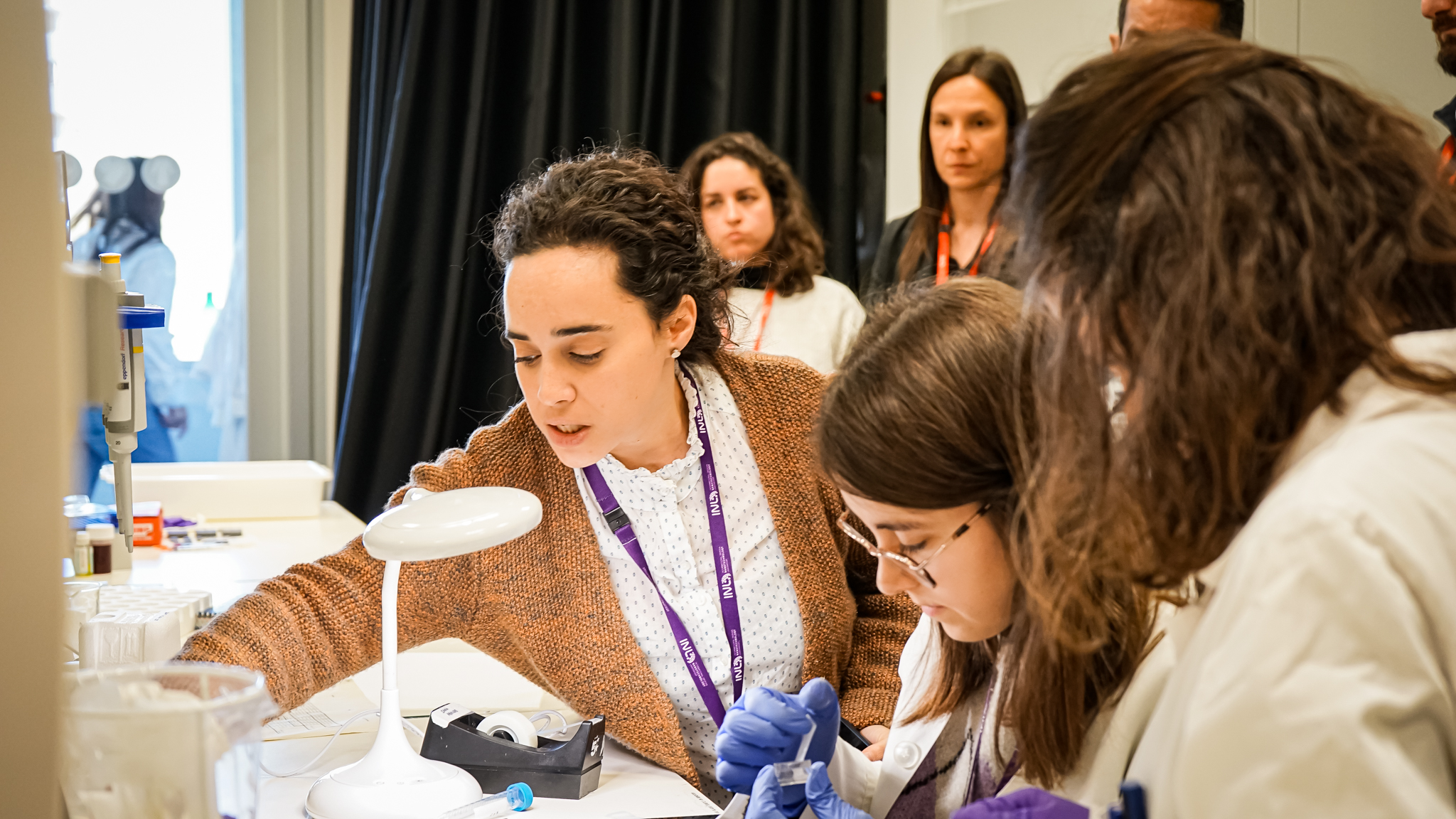
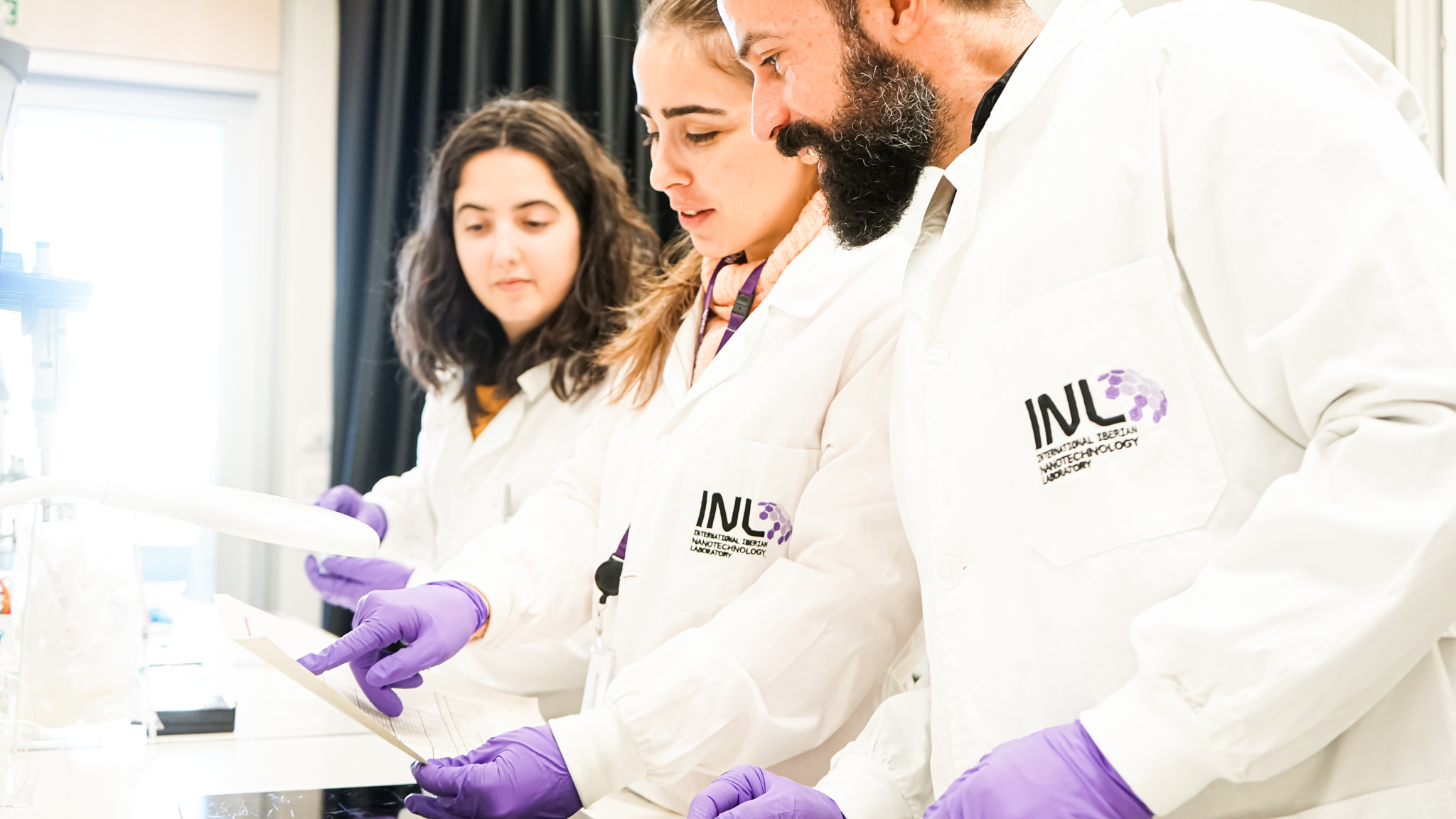
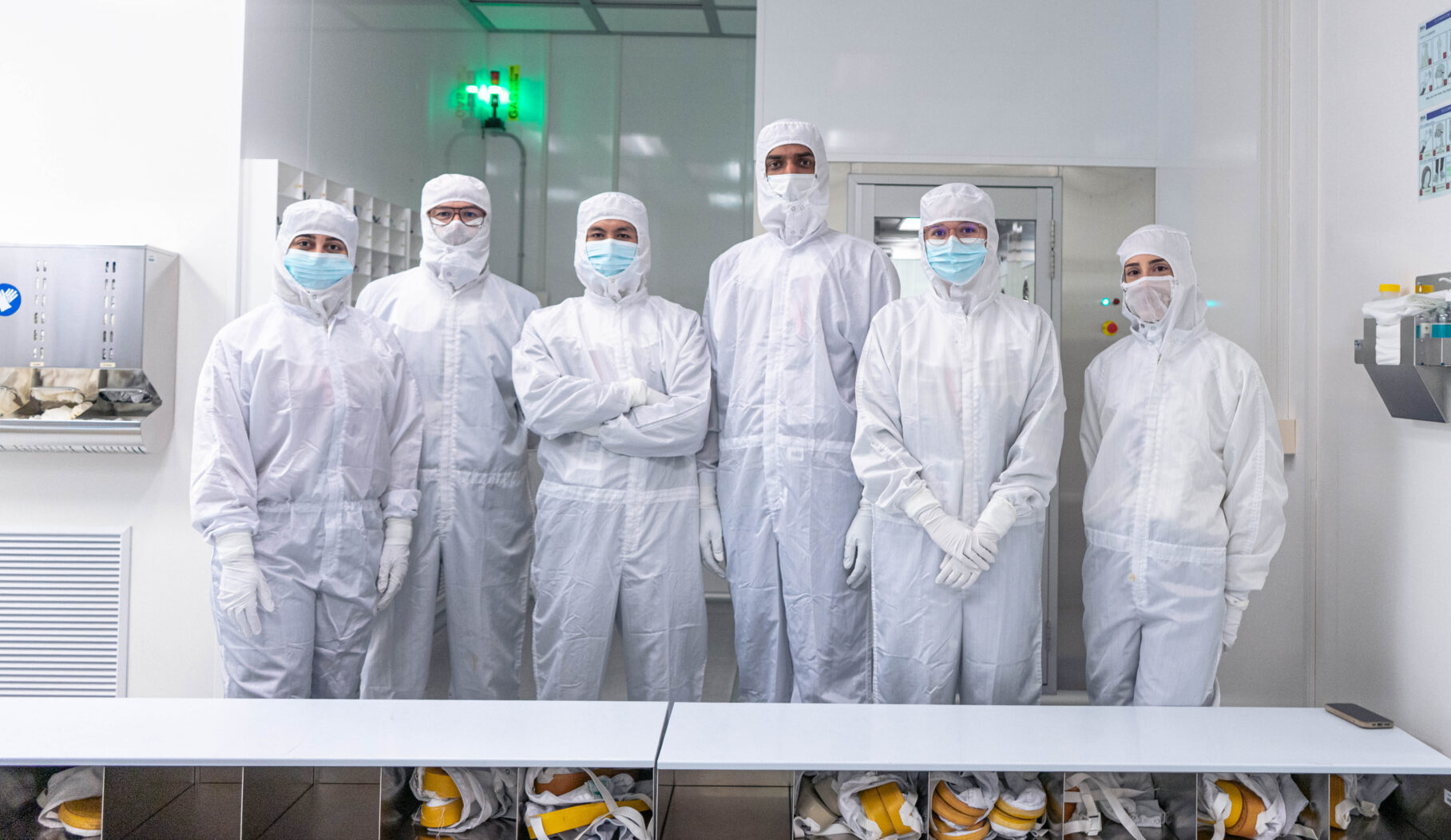
From 18 to 20 November, INL transformed into an insightful learning hub for early-career researchers, as it proudly hosted the INFRACHIP Research Accelerator Programme. The short course on “Micro/Nanofabrication and Characterisation for Nanoelectronics” brought together 5 external early-stage researchers and 8 INLers, eager to deepen their knowledge and gain hands-on experience in advanced nanofabrication and nanocharacterisation techniques. About the programme This intensive training forms part of the broader INFRACHIP initiative, a platform designed to expand access to nanoelectronics infrastructures and strengthen the European research ecosystem. By sponsoring PhD students and early-stage postdoctoral researchers, INFRACHIP encourages participants to apply for transnational access to facilities available through their network, integrating these advanced, and newly acquired skills into their research. Training at INL At INL, participants engaged in a dynamic mix of theoretical lectures and live demonstrations across two core facilities: Micro and Nanofabrication (MNF) and Electron Microscopy and X-Rays (EMX). From the MNF facilities, INL experts Carlos Calaza, Jérôme Borne, Paulo Coelho, and André Cardoso delivered lectures on fundamental processes in micro- and nanofabrication, including deposition, patterning (optical and electron beam lithography), and etching (RIE). Beyond theory, Helder Fonseca and José Rodrigues challenged participants to fabricate a wafer featuring the INL and […]

Read more
Joana Araújo Honoured with Best Shotgun Poster Award at International Caparica Conference PTIM

Joana Araújo Honoured with Best Shotgun Poster Award at International Caparica Conference PTIM

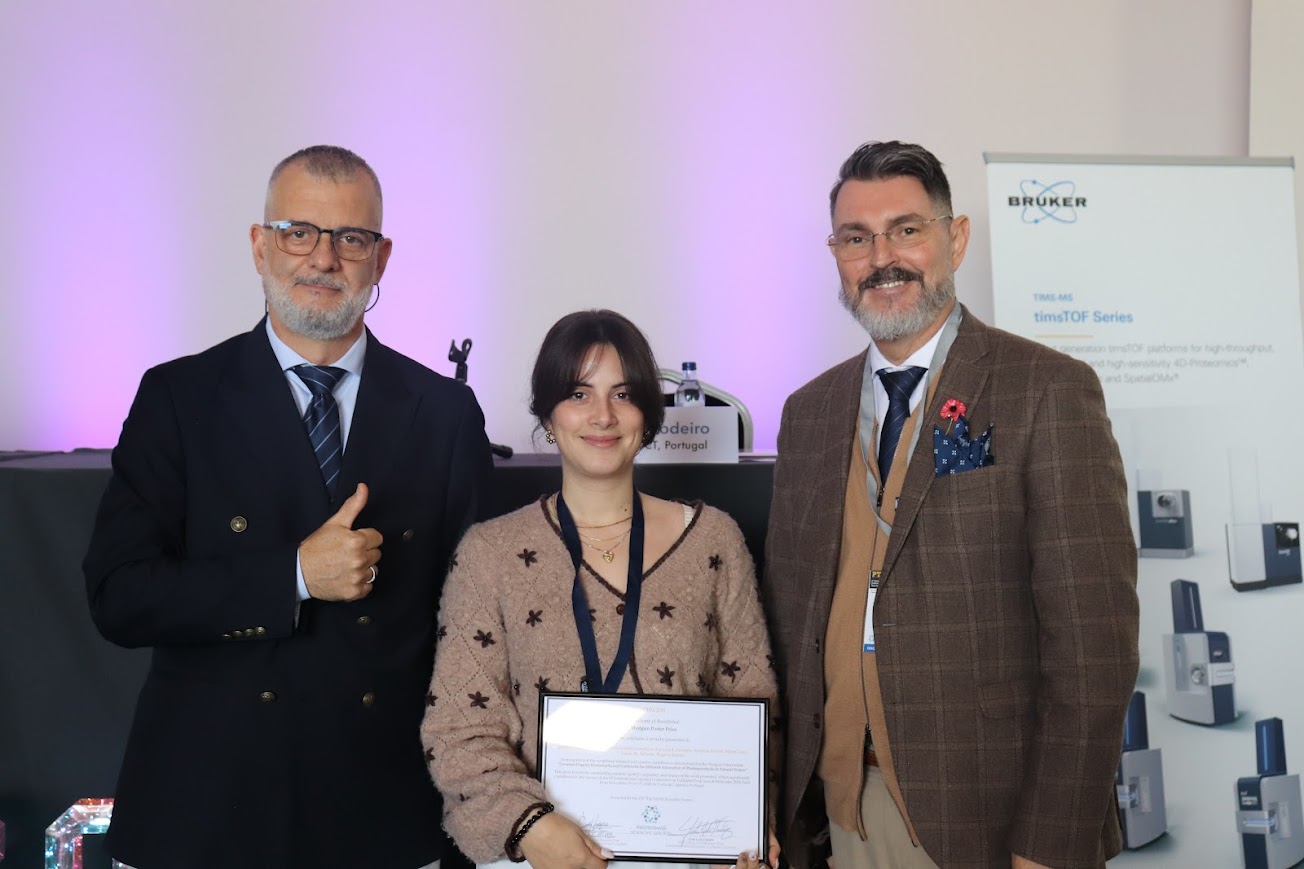
INL is honoured to announce that Joana Araújo, a member of the Kolen’ko research group, has been awarded the prize for Best Poster Presentation at the 6th International Caparica Conference on Pollutant Toxic Ions & Molecules. Held biennially in Costa de Caparica, Portugal, this prestigious event brings together leading experts from the environmental sciences, biology, chemistry, and health research communities. The conference serves as a dynamic platform for showcasing latest technologies, innovative methodologies, and advances in pollution detection, contamination control, and remediation. The sixth edition of the conference took place from 2 to 6 November, featuring an extensive programme of plenary lectures, keynote presentations, oral communications, and poster sessions. Joana Araújo earned her recognition in the Shotgun Poster category, receiving a certificate and a gift from the PROTEOMASS Scientific Society. Her award-winning poster, titled “Covalent Organic Frameworks and Composites for Efficient Adsorption of Pharmaceuticals in Natural Waters”, explored the potential of covalent organic frameworks (COFs) and COF-based composites as efficient adsorbents for monitoring and removing persistent pharmaceutical contaminants from natural water sources. Further contributions from the Espiña Research Group strengthened INL’s presence at the conference. Begoña Espiña, the group leader, delivered a plenary lecture, while Miguel Sousa presented a poster […]

Read more
Cristiana Alves: Revealing the Invisible Through Materials Science

Cristiana Alves: Revealing the Invisible Through Materials Science

Meet Cristiana Alves, Facility Lead at the Electron Microscopy and X-Rays (EMX) Facility at INL. With a lifelong curiosity for how things work and a deep passion for uncovering the unseen, Cristiana’s journey into materials engineering and nanotechnology has been driven by both precision and wonder. From exploring bioactive coatings for dental implants during her PhD to working in one of the most advanced electron microscopy facilities in the Iberian Peninsula, she combines technical excellence with a commitment to discovery. At the heart of her work is a drive to understand materials at their most fundamental level, and to help others do the same. Can you tell us a bit about your path, your main area of work, and the importance of your work?Since I was a child, I have always loved to explore and discover things in nature, get to know how things work, and why they work in such a way. I also loved math because for me, math is simple; there are no doubts or misinterpretations. This combination brought me to an engineering course (materials engineering).While pursuing my master’s, I naturally became passionate about research and science, and I pursued a PhD to study nanomaterials for biomedical applications. When you […]

Read more
From Nanoparticles to Sustainability: A Conversation with Monica Quarato

From Nanoparticles to Sustainability: A Conversation with Monica Quarato

Welcome to this inspiring conversation with Monica Quarato, a passionate scientist whose work bridges nanotechnology, environmental sustainability, and cutting-edge research. With a background in Biotechnology and hands-on experience across Europe, from Turin to Dublin, Ispra, and Braga, Monica has dedicated her career to advancing our understanding of nanoparticles, microplastics, and their impact on both health and the environment. Today, she shares insights from her academic journey, her current projects at the International Iberian Nanotechnology Laboratory (INL), and her vision for the future of water purification and environmental monitoring. How did your academic and professional journey lead you to INL and the Espiña Research Group? During my academic and professional journey, I have been committed to advancing knowledge in the field of nanotechnology and its applications in the medical and environmental sectors, by joining different universities and research institutions. Driven by a growing interest in sustainability and the environmental impact of materials, I became involved in the detection and quantification of emerging contaminants, such as nanoparticles and microplastics, in both consumer products and marine organisms. The hands-on experience in applied environmental research helped shaping my scientific vision and reinforced my dedication in developing practical solutions to address global challenges. Motivated to further […]

Read more
INL Hosts First Edition of Falling Walls Lab Portugal, Showcasing Bold Ideas with Global Potential

INL Hosts First Edition of Falling Walls Lab Portugal, Showcasing Bold Ideas with Global Potential

Yesterday afternoon, June 11, the International Iberian Nanotechnology Laboratory (INL), in Braga, proudly hosted the first edition of Falling Walls Lab Portugal, bringing to the stage five semi-finalists with bold, breakthrough ideas aiming to shape the future of science and society. The event is part of the global Falling Walls initiative, a renowned competition that gives early-career researchers, innovators, and visionaries the opportunity to present their work in just three minutes, in a dynamic and high-impact format. The semi-finalists at the INL edition presented proposals ranging from novel treatments for breast and lung cancer, to strategies addressing neuroinflammation, promoting scientific inclusion in schools, and creating new pathways to connect art, science, and communities. The event was hosted by Marisol Dias, INL researcher and 2024 Falling Walls Lab global finalist, who brought both energy and inspiration to the session. After the pitches, the audience enjoyed a coffee break and networking session, followed by the highly anticipated jury deliberation and announcement of winners. The winner of this first edition of Falling Walls Lab Portugal was Leonor Ribeiro, with her project “Breaking the Wall of Lung Cancer with a Beam of Light” – a promising approach using photonics to improve lung cancer treatment. Leonor will represent Portugal at the Falling Walls Science Summit in Berlin this November, joining an international […]

Read more
Interview with António Costa: Where 2D Materials Meet Quantum Innovation

Interview with António Costa: Where 2D Materials Meet Quantum Innovation

Since earning his PhD in 1998, António Costa—Associate in the Rossier Research Group—has dedicated his research to the theoretical exploration of low-dimensional magnetic systems, with a particular emphasis on spin excitations. By combining analytical approaches with computational modeling, he investigates how magnetic materials respond to external influences such as magnetic fields and electrical currents, uncovering fundamental mechanisms that underpin their behavior. Your research focuses on 2D materials and the interface between plasmonics and magnonics. What recent breakthroughs stand out in your work?On the magnonics side, we have been studying the spin excitations of a new kind of magnetic materials called altermagnets. These have properties that are sort of in-between ferromagnets and antiferromagnets. We have demonstrated that the lifetime of magnons in metallic altermagnets can be highly anisotropic, a property that can be exploited technologically to guide magnons along certain paths in the material. Further details can be found in the publication here.On the magnonics/plasmonics interface, we have shown that graphene plasmons can couple strongly to the low-energy magnons in a 2D insulating ferromagnet, which can be uses as a new way to probe magnons in 2D materials, and also as a way to convert a magnetic into an electric signal and […]

Read more
1 2 3 70