News

Hazal Gergeroglu: Advancing Science as a Research Engineer and Advocating for Women in STEM

Hazal Gergeroglu: Advancing Science as a Research Engineer and Advocating for Women in STEM

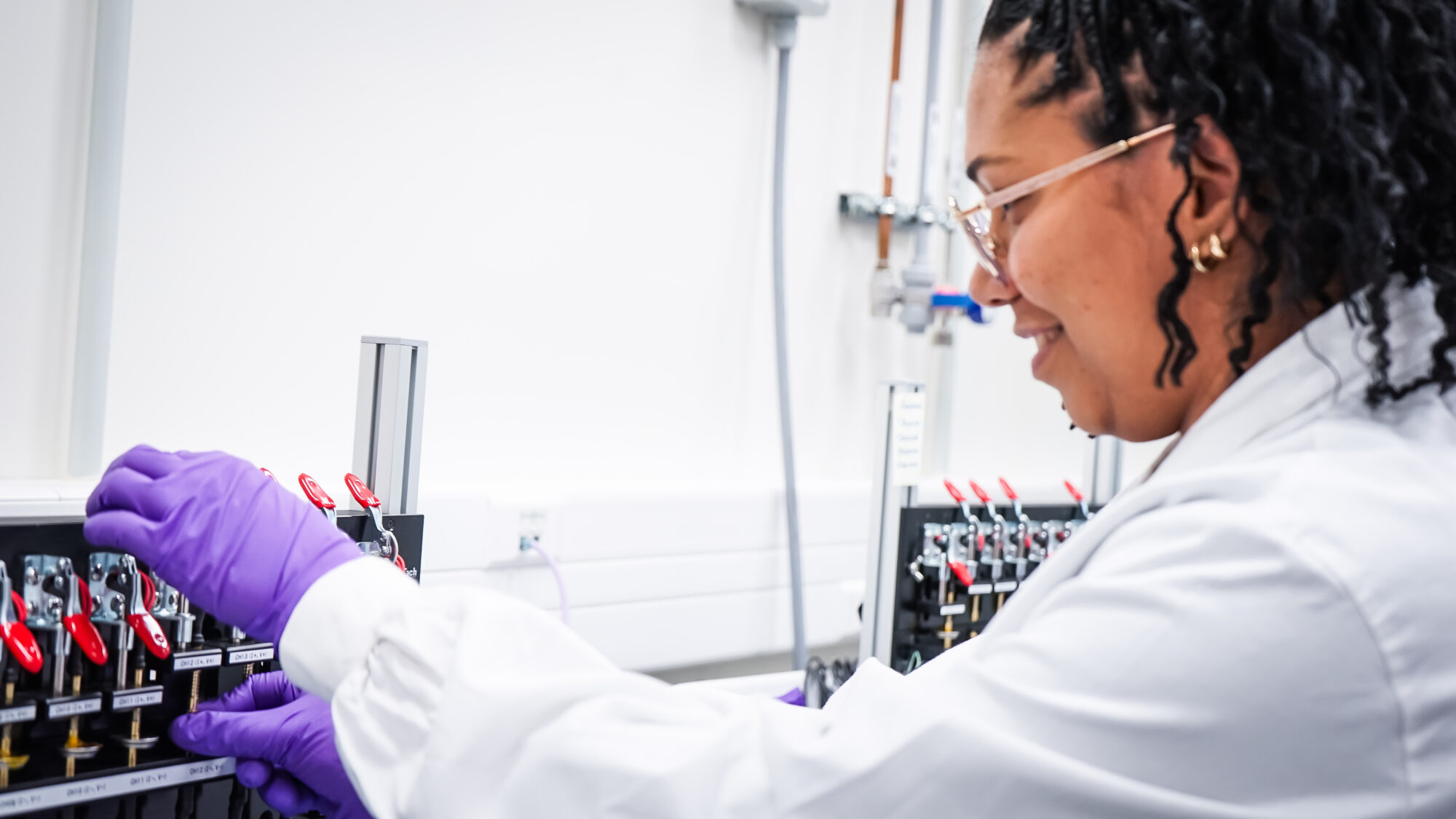
At INL, research engineers are at the forefront of scientific innovation, bridging the gap between research and practical applications. Meet Hazal Gergeroglu, a Research Engineer in the Piteira Research Group, working on cutting-edge sensor technologies for lithium-ion batteries while also advocating for greater inclusivity in STEM. In this interview, Hazal shares how her role has evolved, the impact of her research on energy storage solutions, and the challenges in her field. She also reflects on the barriers women in STEM still face and the importance of fostering a more equitable and inclusive scientific community. How has your role as a Research Engineer evolved over time? When I started at INL as a research engineer, my work focused primarily on experimental research, sensor design, and data analysis. Over time, I took on additional responsibilities in project management, team coordination, and interdisciplinary collaborations. As part of these advancements, I am currently producing various sensor components and assembling these sensors into lithium-ion batteries to improve their safety and performance. In the future, I aim to keep participating in projects integrating scientific research into the industry, focusing on microsensors for batteries, ensuring more efficient and reliable energy storage solutions. Can you describe your work in the […]

Read more
INL Develops High-Speed Nanosecond True Random Bit Generator for Secure Computing

INL Develops High-Speed Nanosecond True Random Bit Generator for Secure Computing

The International Iberian Nanotechnology Laboratory (INL) has developed a Nanosecond True Random Bit Generator (nRBG), on an advanced solution for secure randomness in cryptographic systems, artificial intelligence (AI), and high-performance computing (HPC). The nRBG technology operates at the nanoscale and delivers true random numbers at a speed of one bit every 10 nanoseconds, making it one of the fastest and most reliable random number generation solutions available today. Its high entropy and unpredictability have been validated through 10 National Institute of Standards and Technology (NIST) randomness tests, ensuring its suitability for critical security applications. Advancing Computing with True Randomness Random number generation is a fundamental component of digital systems, particularly in encryption, communications, and AI-driven models. Unlike other generators, which rely on deterministic algorithms, INL’s nRBG generates unpredictable, high-speed random bit streams, enhancing efficiency across various domains. Key features of INL’s nRBG include: Potential Applications: INL’s nRBG is designed to support a range of high-security and computational applications, including: INL partners with technology companies, research institutions, and industry leaders to explore: technology integration – embedding the nRBG into existing and emerging security architectures; joint research and development (R&D) – advancing next-generation randomness solutions for AI, quantum computing, and cybersecurity; and commercialisation pathways – bringing nRBG technology to market-ready applications. Organisations interested in integrating nRBG […]

Read more
Can Earth’s gravitational field monitor climate change?

Can Earth’s gravitational field monitor climate change?

The measurement of our planet’s gravitational field, known as gravimetry, allows us to extrapolate the rate at which climate changes are occurring by detecting small variations in Earth’s gravitational field, caused, for example, by melting ice. Inês Sofia Garcia, a Research Engineer at INL, is focused on the development of a high-precision MEMS (micro electromechanical system) accelerometer, crucial for detecting the gravity field shifts of our planet. This accelerometer is a system capable of converting a mechanical phenomenon into an electrical one, and vice versa, transforming an electrical signal into a mechanical displacement. “Our group is creating a MEMS accelerometer to measure Earth’s acceleration changes,” explains Inês Garcia. “We handle the system’s modelling, design, fabrication, and characterisation.” With rigorous demands for stability, power management, and satellite orientation accuracy, this research work strengthens Portugal’s position in the global space sector. The team developed the device as part of the uPGRADE project, and at INL, we are already looking ahead to its next phase: uPGRADE-NEXT. In this new project, the device will undergo space qualification and is set to be included in the first uPGRADE microsatellite launch, planned for mid-2026. These flagship projects, led by Rosana Dias and Filipe Alves, will also […]

Read more
INL Celebrates Women in Science

INL Celebrates Women in Science

Today, February 11, in celebration of the International Day of Women and Girls in Science, the International Iberian Nanotechnology Laboratory (INL) proudly presents its latest video tribute to all the Women working at INL. This powerful visual story highlights the dedication, talent, and achievements of women scientists at INL who are shaping the future of nanotechnology. Despite progress in gender equality, only 41% of scientists and engineers in Europe are women. At INL, we are committed to increasing this representation, with 42% of our researchers being women—a testament to our dedication to inclusivity and scientific excellence. The video showcases the inspiring work of several outstanding women scientists, engineers, and facility managers at INL. Through their groundbreaking research and unwavering commitment, they are paving the way for future generations and proving that there is a place for women in science. 📽 Watch the video and join us in celebrating these incredible women who are transforming the world of science and INL. Thank you to all the women at INL for your resilience, passion, and commitment to pushing scientific boundaries. And to all INLers—thank you for supporting and championing an inclusive and diverse research environment. Let’s continue breaking barriers and building a future where science belongs […]

Read more
INL’s Women in Science Shine at PQHack 2025

INL’s Women in Science Shine at PQHack 2025

INL proudly celebrates the remarkable achievement of three of its researchers, Alexandra Ramôa, Ana Neri, and Sara Franco, members of the Galvão Research Group who, along with Bruna Salgado from the University of Minho, secured second place at PQHack 2025 as Team Quantum Shemulation. Their outstanding performance in tackling quantum computing challenges earned them the prestigious Team Quantum Shemulation prize on International Day of Women and Girls in Science. PQHack 2025 proved to be an exciting competition, bringing together 39 participants across 12 teams for a 24-hour quantum computing hackathon. Fueled by determination (and plenty of coffee and pizza), the teams engaged in a series of complex coding challenges designed by experts in the field. The results showcased the incredible talent and innovation within the quantum community. This achievement is not only a testament to the expertise and dedication of our INLers but also an inspiration for greater representation of women in quantum science. As we celebrate International Day of Women and Girls in Science, we recognize their hard work and contributions in shaping the future of quantum technologies. Congratulations to all the participants, and especially to Alexandra, Ana, and Sara for making INL proud! Photo kindly provided by PQHack 2025 Team

Read more
INL advances skin engineering with the European network NETSKINMODELS

INL advances skin engineering with the European network NETSKINMODELS

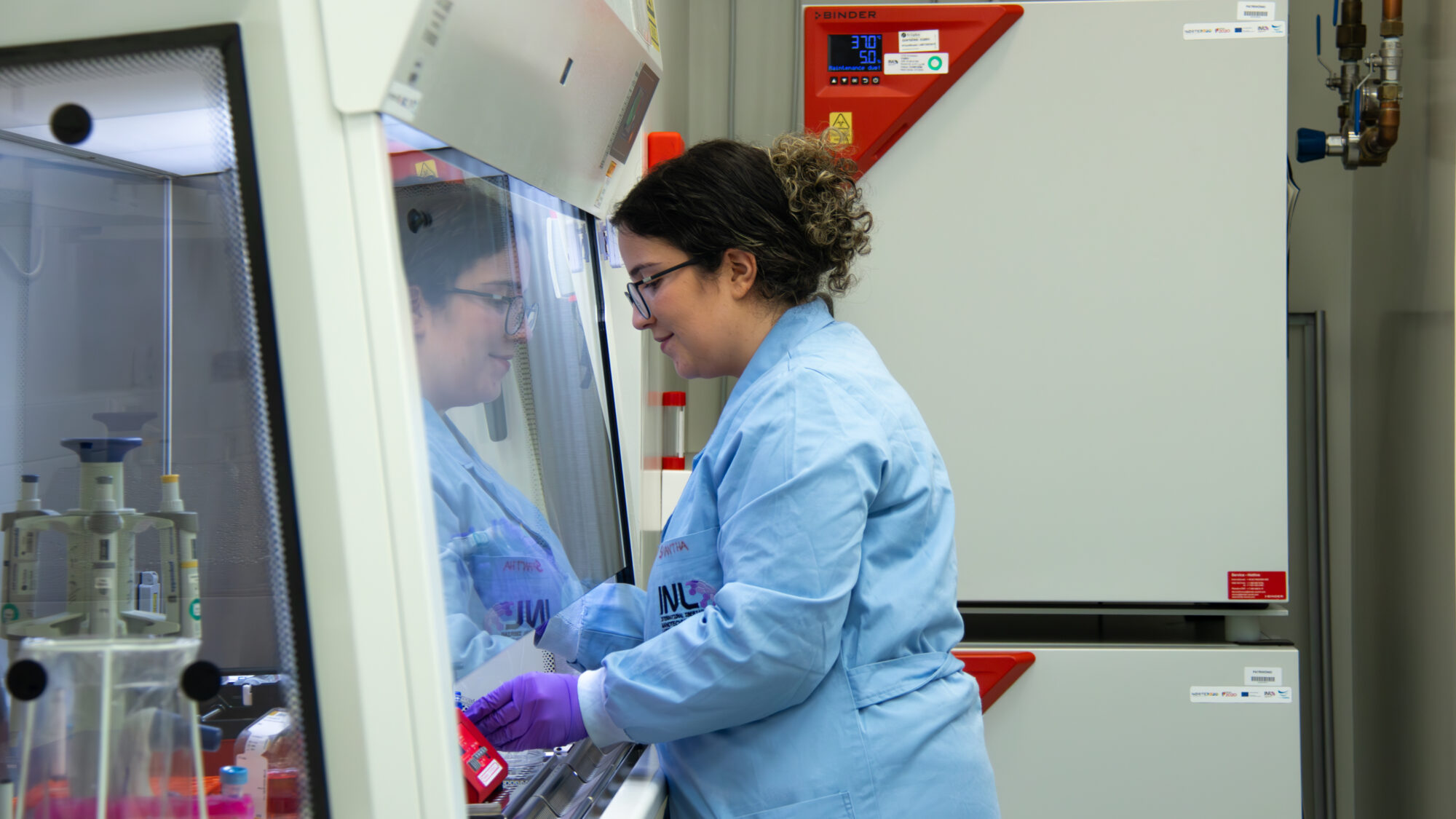
Advances in skin engineering research are being made at the INL as part of the NETSKINMODELS COST Action. This European network is dedicated to advancing skin engineering and modelling by developing improved cell-based and computational skin models, with the goal of reducing reliance on animal testing. Ana Ribeiro, staff researcher at INL, highlights the contributions of Alfaro-Moreno’s research group: “At INL, we are developing skin-on-chip models, which are advanced microfluidic devices designed to replicate the structure and function of human skin. These models have the potential to transform research by providing more reliable and human-relevant data while supporting the 3Rs principle: reducing, refining, and replacing animal testing.” Samantha Costa, one of the next-generation researchers benefiting from the NETSKINMODELS educational initiatives, has joined INL for her PhD research. Samantha’s work takes a further step towards the practical applications of these models, from testing cosmetics and nanoparticle safety to skin microbiome interactions. By focusing on sustainable and ethical research practices, Samantha concludes that “INL’s innovations aim to benefit science, industry, and society.” “This work not only advances dermatological research but also helps prepare the next generation of scientists,” adds Ana Ribeiro. “Through initiatives like NETSKINMODELS, we are ensuring that Europe remains at […]

Read more
INL researchers are exploring new ways to predict breast cancer metastasis

INL researchers are exploring new ways to predict breast cancer metastasis

A research project called 3DSecret is exploring innovative methods to predict breast cancer metastasis by analysing tumour cells circulating in the bloodstream. 3DSecret focuses on understanding how these cells contribute to cancer spreading to distant organs, which is the primary cause of mortality in breast cancer patients. Breast cancer metastasis often occurs via the hematogenous route, i.e. through the bloodstream. The presence of circulating tumour cells (CTCs) provides an opportunity to study the disease through blood samples rather than invasive tissue biopsies. Using specialised devices, INL researchers can isolate these tumour cells from blood samples. The next step involves cultivating individual CTCs in an artificial culture system, in the lab, designed to mimic their natural environment. Data from these cultures are then analysed using artificial intelligence algorithms. By examining the genetic profiles of the tumour cells and the substances they secrete, the project aims to identify unknown drivers of breast cancer metastasis. Recently, the project technical coordinator, Miguel Xavier, was at ‘90 Segundos de Ciência’, a series of science communication episodes with daily broadcasts on the Portuguese public radio Antena 1. Miguel is confident about the broader implications of this project, “this research could provide insights into the relationship between […]

Read more
How microalgae could transform the way we produce photonics

How microalgae could transform the way we produce photonics

Photonic crystals, essential for controlling and manipulating light, are key components in advanced technologies such as lasers and sensors. However, their production is typically expensive, requiring sophisticated cleanroom facilities. Researchers at INL are exploring innovative alternatives by leveraging structures naturally produced by microalgae. Pedro Braga Fernandes, a PhD candidate at INL, explains “Our group works on photonic structures, and we try to draw inspiration from nature for that. I work with microalgae called diatoms. These diatoms produce a silica exoskeleton with an organisation resembling a photonic crystal, similar to those we create in the cleanroom.” This natural resemblance of diatoms with photonic crystals could bring a new solution for more sustainable production methods. Unlike traditional fabrication methods, the use of diatoms eliminates the need for costly cleanroom environments, reducing both financial and environmental impacts. Pedro Braga Fernandes highlighted the nano-patterned silica potential applications, “This enables easy integration of the structures produced by the algae into essential technologies, ranging from biosensors to quantum systems”. This unique approach not only has the potential to reduce production costs but also offers a sustainable alternative for developing photonic technologies. By using natural processes, researchers at INL aim to unlock new possibilities across a wide […]

Read more
2024 Yearly Wrap-up: Research

2024 Yearly Wrap-up: Research

As we reflect on the scientific achievements of 2024, we are proud to present the latest research spotlights that showcase the diversity, innovation, and societal impact of INL’s research. From addressing global health challenges like antimicrobial resistance and Parkinson’s disease to advancing quantum technology, sustainable solutions, and AI energy efficiency, this compilation highlights the exceptional work of our researchers and collaborators. These research updates represent just a fraction of our accomplishments this year but capture the essence of our commitment to advancing science for a better world. Join us in celebrating these remarkable milestones! Phages – A dual solution to the Antimicrobial Resistance (AMR) Crisis – Antimicrobial resistance (AMR) has emerged as one of the most pressing global health threats of our time, directly causing and contributing to millions of deaths worldwide, as reported by the World Health Organization (WHO). Nanoscale analysis with DNA-graphene origami – In a recently published study in Advanced Materials Interfaces, INL researchers have developed a new sensor that merges DNA origami with graphene to achieve unique accuracy in detecting molecular motion. Nieder’s group at INL, together with Alpuim’s group (INL) and Thorsten-Lars Schmidt  (Kent State University), developed this innovative sensor that could have significant potential for applications in medicine and environmental monitoring. Nanodiamonds bring […]

Read more
1 2 3 4 5 70