News

INL advances nanotechnology for Smart City future

INL advances nanotechnology for Smart City future

This year at the Open Day, more than 1000 visitors had the chance to discover the new demonstrator ‘Smart City’, showcasing a fusion of advanced nanotechnologies developed at INL. ‘Smart City’ not only highlights INL’s research and development in nanotechnology but also exemplifies the potential of these technologies to foster smart, sustainable urban environments. At the heart of this demonstrator are MEMS, or Micro-Electromechanical Systems. These small, integrated devices combine electrical and mechanical components to perform functions such as sensing, controlling, and actuating on a micro-scale. They can produce or sense micro-motion or micro-forces, making them indispensable in sectors ranging from automotive and medical to telecommunications and electronics. The transformative potential of MEMS lies in their ability to significantly alter how humans interact with technology and their surroundings. At the core of this ‘Smart City’ is the Sensible Car project, which highlights the development of intelligent sensors essential for autonomous driving. These sensors enable comprehensive perception of surroundings, real-time precise location updates, and flawless action execution. INL’s contribution to this project includes the creation of two-dimensional MEMS mirrors, diffractive optical elements, tuneable filters, and lenses, all integrated into a LiDAR system. LiDAR, or Light Detection and Ranging, measures distances by […]

Read more
INL engages the next generation with “Researchers at Schools” initiative

INL engages the next generation with “Researchers at Schools” initiative

In an ongoing effort to bridge the gap between nanotechnology research and the younger generation, INL is actively participating in the European Commission’s flagship initiative, “Researchers at Schools“. This initiative is designed to promote direct interaction between researchers and students, encouraging a deeper understanding of science, nanotechnology, and research activities among young minds. Last Friday marked a significant day for the “Researchers at Schools” program, with INL researchers visiting various educational institutions to engage with students and teachers, kick-starting the project SCIGLO – European Researchers’ Night. Raquel Queirós visited a primary school in Maia, where she interacted with a lively class of 26 students. The session aimed to introduce the basics of science and nanotechnology, sparking curiosity and excitement among the young learners. Miguel Cerqueira headed to Ponte da Barca, addressing 64 secondary school students from the 11th and 12th grades at Agrupamento de Escolas de Ponte da Barca. The discussions focused on advanced research topics, the impact of scientific discoveries on society, and potential career paths in the field of nanotechnology. Centro de Ciência Viva Guimarães invited Catarina Moura and Mariam Debs to lead a science communication workshop for school teachers. This event was part of the Picto_Ciência III […]

Read more
INL Welcomes Microscopy Enthusiasts for International Day of Light Celebration

INL Welcomes Microscopy Enthusiasts for International Day of Light Celebration

The INL – International Iberian Nanotechnology Laboratory opened its doors this May to welcome microscopy enthusiasts, researchers at all career stages, engineers, and university students, particularly from the fields of science and engineering, in a grand celebration of the International Day of Light (#IDL2024). The event, which marked a global initiative highlighting the importance of light and optical technologies in science, culture, and sustainable development, provided a unique opportunity for participants to delve into the fascinating world of microscopy. The INL’s celebration of #IDL2024 was not only an educational event but also a platform for fostering collaboration and inspiring the next generation of scientists and engineers. By bringing together a diverse group of participants, INL demonstrated its commitment to promoting scientific literacy and innovation. As the event concluded, participants left with a deeper appreciation for the role of light in scientific discovery and a renewed passion for their respective fields. The success of the event underscored the importance of community engagement in science and the ongoing efforts of INL to support and inspire future advancements in nanotechnology and beyond. For more information about upcoming events at INL, please visit our website and follow us on social media. + www.inl.int

Read more
New sustainable graphene production developed at INL

New sustainable graphene production developed at INL

The rising demand for portable electronics, e-textiles, and IoT devices has driven the need for lightweight technologies and miniaturized energy storage solutions. Graphene-based nanomaterials are at the forefront of extensive research due to their chemical stability, high surface area, strength, flexibility, and superior thermal and electrical conductivity. Supercapacitors, known for their fast charge-discharge rates, long lifespan, and simple structure, are becoming essential for energy storage in electronics, electric vehicles, and biomedical devices. They operate by storing charges through the adsorption and desorption of ions at electrode interfaces, achieving power densities over 10,000 W/kg. Microsupercapacitors, which are smaller and lighter versions, are particularly suitable for portable and wearable electronics, offering even higher power densities. The high electrical conductivity and surface area of specific graphene materials make them ideal for these applications. However, current production methods present toxicity and scalability issues that have limited their widespread use. Additionally, the materials need to comply with the requirements of deposition techniques able to guarantee reasonable production throughput. Now, INL researchers have developed a sustainable approach to produce an electrically conductive, graphene-based paste suitable for fabricating flexible devices. The results are reported today in the journal Nano Energy, in a paper by INL researchers, in collaboration with the […]

Read more
INL researchers are integrating light and AI to advance nanotechnology

INL researchers are integrating light and AI to advance nanotechnology

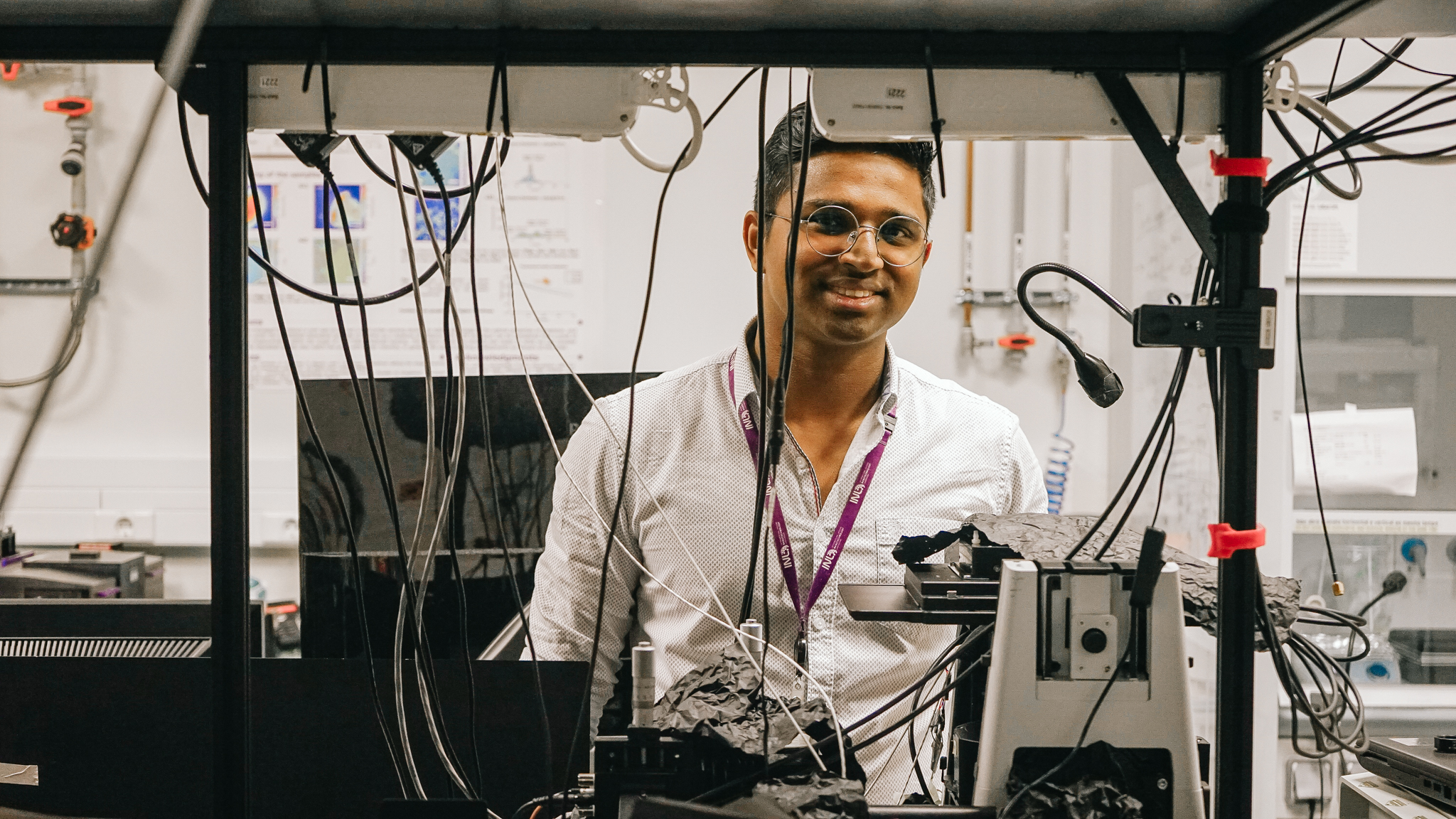
‘What if the brains of future robots are powered by light?’ This was one of the questions INL researcher Bejoys Jacob has been trying to answer during the past years at INL. As artificial intelligence, also known as AI, continues to revolutionise society, scientists are exploring innovative ways to power the brains of future robots. Traditional computer architectures, such as the von Neumann architecture, demand substantial energy consumption to execute AI algorithms. In light of the increasing demand for AI tools and the global push for sustainable energy solutions, researchers are seeking alternative computational architectures inspired by the human brain. At INL, the focus has been on developing a revolutionary architecture powered by light. This ambitious project involves the creation of miniaturised light sources, detectors, and photonic interconnects for a novel photonic integrated circuit architecture. As part of this initiative, Bejoys, who is pursuing a PhD at INL, in the Ultrafast Bio- and Nanophotonics group, in collaboration with Charles III University of Madrid (UC3M), is developing nano- and micro-LEDs based on GaAs III-V semiconductor materials. These LEDs mimic neuronal activity through optical/electrical signals, paving the way for advanced brain-inspired computational architectures. Bejoys explains that “the devices developed through this research […]

Read more
INL researchers awarded funding to develop an automated sensor to detect emerging viruses

INL researchers awarded funding to develop an automated sensor to detect emerging viruses

Zoonotic infectious diseases, i.e. diseases that transmit from animals to humans, are on the rise, and the potential for a new pandemic is more significant than ever. It is imperative to develop advanced technologies capable of continuous monitoring to identify high-risk zones for pathogen transmission between animals and humans. This requirement is essential to mitigate the potential human, socio-political, and economic impact of pandemics. The global initiative ‘One Health’ advocates collaboration among human, animal, and environmental health professionals to address health challenges. Its goal is to comprehend and prevent zoonotic diseases, while fostering a holistic approach to global health. Although the European Parliament calls for continuous surveillance and harmonised data collection from animal farms, current practices fall short for continuous and automatic detection, limiting detection to specific and already known pathogens. FLUFET, which stands for ‘FLow detection of virUses by graphene Field Effect Transistor microarrays’, is the new EIC Pathfinder project with a goal to develop a novel approach for the detection of viruses. It will be the first automated sensor capable of continuously detecting a broad spectrum of viral targets, including unknown viruses. This revolutionary sensor, combining technologies and knowledge from different fields, such as graphene field effect transistors […]

Read more
INL researchers innovating in next-generation solar power

INL researchers innovating in next-generation solar power

Solar cells, also known as photovoltaic cells, directly convert sunlight into electricity. The most prevalent type, crystalline silicon photovoltaic cells, found in commercially available solar panels, benefit from extensive expertise and synergies with the microelectronics industry. Despite their cost competitiveness, silicon photovoltaic cells have limitations, such as poor sensitivity to low light, rigid modules, conservative aesthetics, and limited flexibility in dimensions. If photovoltaics are to be deployed in a larger number of applications, these limitations need to be addressed. The Nanofabrication, Optoelectronics, and Energy Applications (NOA) research group is exploring novel thin-film solar cell concepts – or next-generation photovoltaics – to enhance performance while meeting environmental standards. They are particularly focused on developing solutions that merge conversion efficiency, durability, and aesthetics for building-integrated photovoltaics (BIPV), targeting stakeholders in the construction industry. BIPV offers a practical means of integrating photovoltaic systems into buildings, potentially facilitating the installation of hundreds of gigawatts worldwide without the need for additional land. This approach aligns well with the current trend of urbanisation. Pedro Salomé, NOA’s group leader, elaborates “We are engaged in various projects, funded by Portuguese and European programmes, to devise solutions that overcome the challenges posed by conventional silicon modules. Most of our […]

Read more
A microfluidic platform that simulates human digestion

A microfluidic platform that simulates human digestion

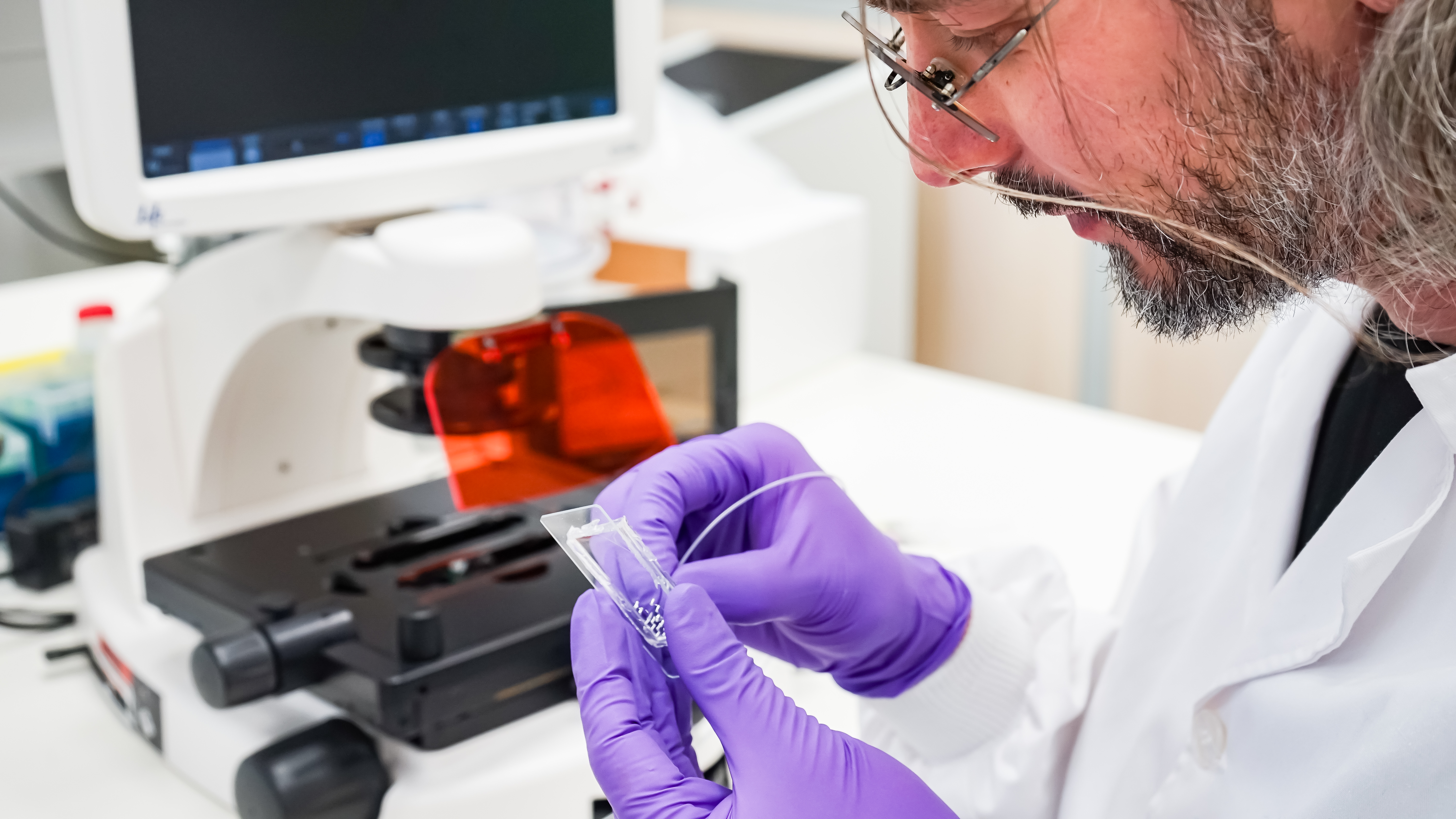
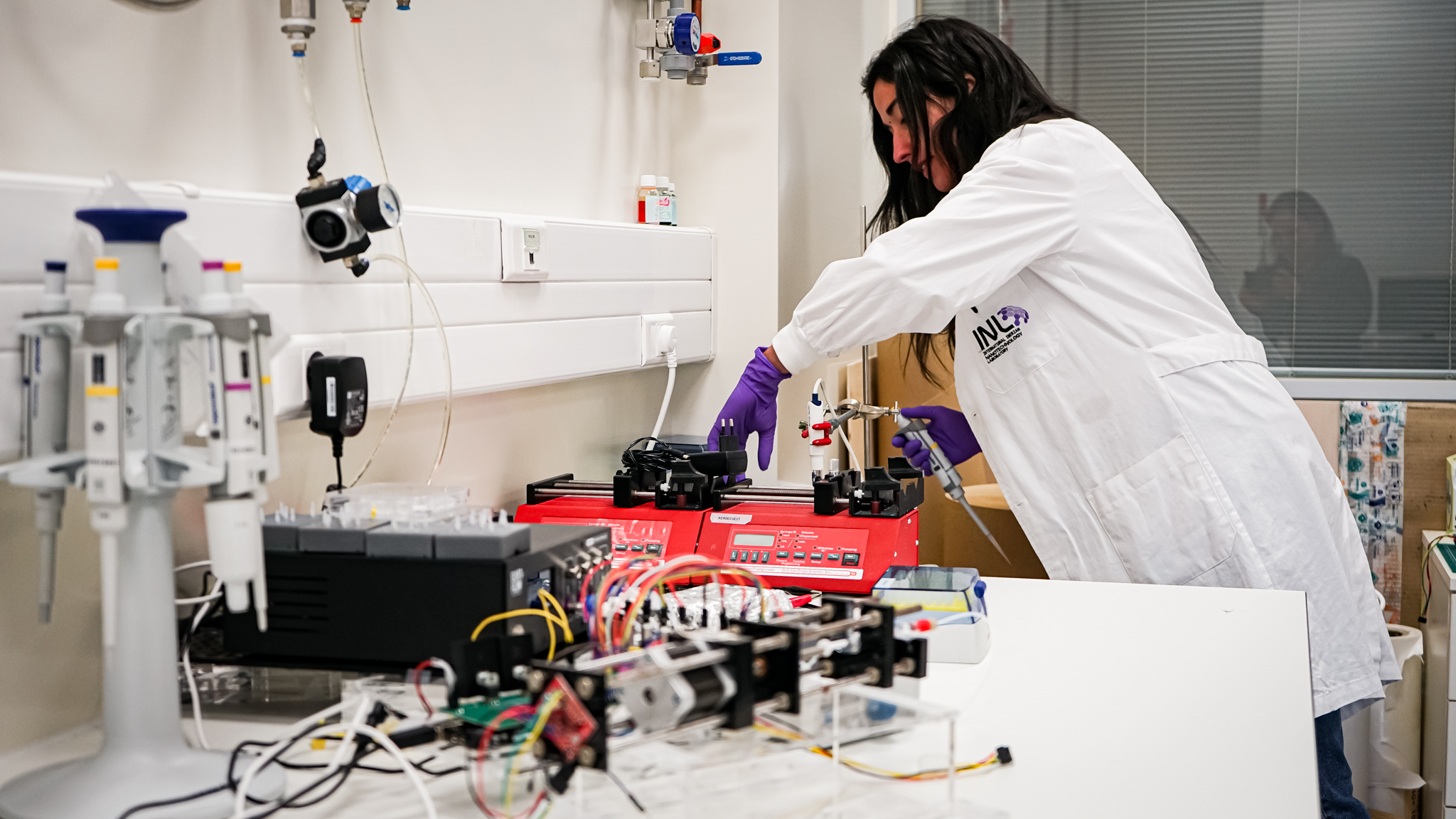
In a recently published study, INL researchers developed an innovative microfluidic platform that is capable of replicating key human gastrointestinal processes, offering a game-changing tool for the assessment of newly-developed drugs and/or food supplements. The innovation combines a ‘Digestion-Chip’ and a ‘Gut-Chip’, each enabling sequentially the simulation of digestion through the gastrointestinal tract and the evaluation of intestinal permeability. The study ‘From mouth to gut: microfluidic in vitro simulation of human gastro-intestinal digestion and intestinal permeability’, introduces a miniaturised setup that allows studies of sample bioaccessibility and simplified bioavailability using minimal sample amounts. In addition, the outflow from the ‘Digestion-chip’ can be exposed to the cell-based Gut-Chip, which replicates the intestinal epithelium, using unprecedentedly low sample dilutions thus allowing the detection of ‘rare’ compounds. Both devices work in continuous flow requiring very little user interfacing. In this work, casein – a milk protein that is widely used as a supplement in sports nutrition – was tested as a model compound. And critically, the Gut-Chip can be used to evaluate intestinal permeability offering reference permeability values that are in line to those found using human ex vivo models. Miguel Xavier, one of the first authors of the research study adds “the […]

Read more
Detecting objects without any physical interaction – reality or science fiction?

Detecting objects without any physical interaction – reality or science fiction?

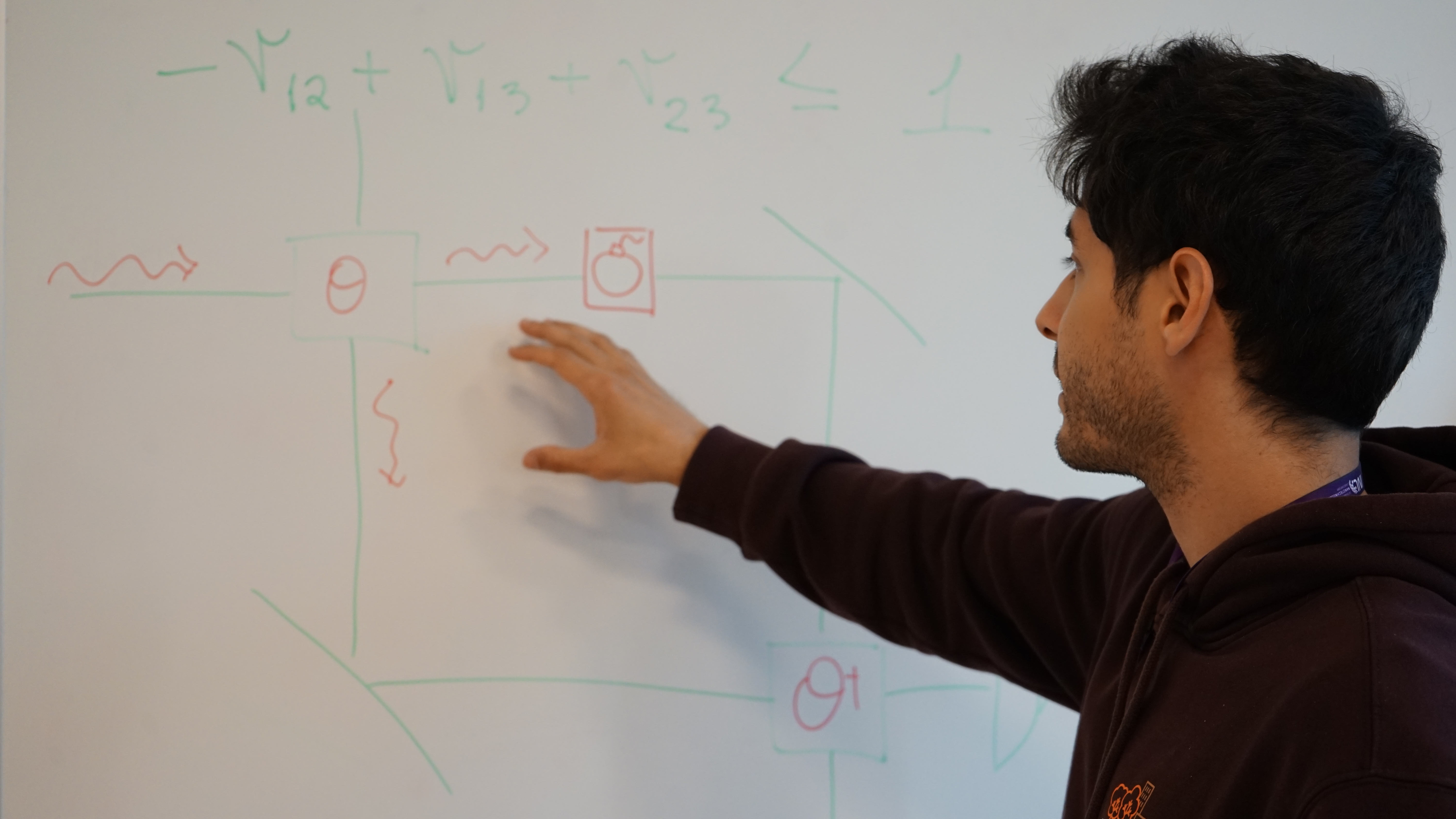
INL researchers have explored a fascinating quantum ability which lacks a classical explanation: the capacity to detect objects without traditional physical interaction. Rafael Wagner and Anita Camillini, INL PhD candidates, alongside the research group-leader Ernesto F. Galvão, have published a paper describing the revolutionary approach that challenges conventional concepts of detection. Imagine being able to identify something without actually touching it – similarly to diagnosis a hidden fracture without an X-ray or recognising a distant voice without hearing it directly. This study explores how quantum computers can achieve that, and detect objects without direct interaction. Rafael Wagner explains “It has been known for a long time that it is possible to detect things without interactions, as a result of the famous thought experiment introduced by Elitzur and Vaidman. They imagined an extreme situation where either there is a bomb in one of the arms of an interferometer, or there is no bomb.” Interferometers are tools used in many fields of science and engineering. The working principle of interferometry consists on splitting the light into two beams that travel different optical paths and are then combined to produce an interference pattern. Their scenario presents an unusual premise: within an interferometer setup, […]

Read more
1 5 6 7 8 9 70