News

Empowering Future Scientists: Highlights from INL’s 1st ESRA Symposium

Empowering Future Scientists: Highlights from INL’s 1st ESRA Symposium

In 2024, the INL – International Iberian Nanotechnology Laboratory buzzed with energy as it hosted the inaugural ESRA Symposium, organised by the Early-Stage Researchers Association (ESRA). This groundbreaking event welcomed over 160 participants, including master’s students, PhD candidates, junior researchers, and early-career scientists, offering a vibrant platform to connect, share, and celebrate their innovative research conducted at INL. The symposium began with a warm welcome from INL’s Director General, Professor Clivia Sotomayor, who underscored the value of collaboration among emerging researchers. Setting an inspiring tone, Professor Ado Jório, INL’s Deputy Director General, delivered the keynote address, “Seeing the Future.” Prof. Ado provided practical insights on transforming ideas into innovations, emphasising their potential to tackle global challenges. Participants showcased their research through engaging Oral Communications and Poster presentations, with discussions brimming with innovation and collaboration. Day two featured a compelling keynote presentation by Doctor Catarina Moura, INL’s Science Communication Officer. Her talk, “Bringing Science to Life,” highlighted the critical role of science communication in making research accessible to wider audiences and strategies to deepen public engagement with scientific discoveries. The symposium celebrated the outstanding contributions of its participants, presenting 15 Oral Communications and over 50 posters that stimulated lively exchanges and sparked new ideas. […]

Read more
Phages – A dual solution to the Antimicrobial Resistance (AMR) Crisis

Phages – A dual solution to the Antimicrobial Resistance (AMR) Crisis

Antimicrobial resistance (AMR) has emerged as one of the most pressing global health threats of our time, directly causing and contributing to millions of deaths worldwide, as reported by the World Health Organization (WHO). Beyond the human toll, the economic impact is staggering. By 2050, AMR could add $1 trillion in healthcare costs annually and slash global gross domestic product (GDP) by up to $3.4 trillion per year by 2030. But amidst these daunting figures, a beacon of hope has appeared – bacteriophages (phages). In an era where AMR poses one of the greatest challenges in modern medicine, phages, viruses that specifically target bacteria, represent a revolutionary alternative to traditional antibiotics. A recent milestone in this field has been Portugal’s approval of customised bacteriophage therapies in hospital settings, setting Portugal to be only the third European country, alongside Belgium and France, to approve until now a guiding regulation for these new therapies (INFARMED, I.P. deliberation No. 112/CD/2024, November 15, 2024) for complex bacterial infections. This decision aligns closely with INL’s cutting-edge research on phages.  Dr. Sanna Sillankorva, a tenured staff researcher from the Bañobre Research Group at INL has been instrumental in this progress. Her work focuses on isolating and […]

Read more
Diana Alves’ Journey: Pioneering Superhydrophobic Coatings for Sustainability

Diana Alves’ Journey: Pioneering Superhydrophobic Coatings for Sustainability

We are thrilled to have Diana Alves with us today. Diana joined the Kolen’ko’s Group at INL as a Research Fellow in February 2022, where her groundbreaking work focuses on developing paint functional additives based on nanomaterials with hydrophobic properties. Diana’s journey in science began with a master’s degree in Biomedical Engineering from the University of Minho in 2011. Her international experiences include pivotal research stints at the University Medical Centre of Groningen and Innocore Pharmaceuticals in the Netherlands. She later pursued a PhD in Chemical and Biological Engineering, also at the University of Minho, focusing on functionalizing biomaterials to impart antimicrobial properties. During this time, she collaborated with the prestigious Messersmith Research Group at Northwestern University in the USA. Her postdoctoral and junior research years further showcased her versatility, as she delved into areas such as bacteriophage encapsulation for food safety and antimicrobial coatings for medical devices. Let’s dive into her inspiring journey and groundbreaking research! 1. Your career has taken you from Portugal to the Netherlands and the USA, working with institutions like Innocore Pharmaceuticals and Northwestern University. How have these international experiences shaped your approach to research and innovation?” Both international experiences – first in the Netherlands […]

Read more
Nanoscale analysis with DNA-graphene origami

Nanoscale analysis with DNA-graphene origami

In a recently published study in Advanced Materials Interfaces, INL researchers have developed a new sensor that merges DNA origami with graphene to achieve unique accuracy in detecting molecular motion. Nieder’s group at INL, together with Alpuim’s group (INL) and Thorsten-Lars Schmidt  (Kent State University), developed this innovative sensor that could have significant potential for applications in medicine and environmental monitoring. The sensor combines DNA origami structures and a graphene layer functionalised to interact with fluorescent markers. These markers emit light, and their fluorescence behaviour – specifically its duration – changes based on their proximity to the graphene. By applying electrical signals, researchers can control this distance, enabling them to track movements as small as two nanometres. “The novelty here is that we can actually gate the graphene and sense the effects of this electrostatic approach in the fluorescent behaviour of the fluorophores,” explains João Azevedo, first author of the study. The team used Fluorescence Lifetime Imaging Microscopy (FLIM), a technique that measures the time fluorescence lasts, to achieve this high-resolution sensing. Unlike traditional fluorescence intensity methods, FLIM is less affected by photobleaching, a process where fluorescent markers lose their ability to emit light after prolonged exposure. By focusing on lifetime […]

Read more
Nanodiamonds bring new hope for Parkinson’s research with advanced neuronal sensing

Nanodiamonds bring new hope for Parkinson’s research with advanced neuronal sensing

Researchers at INL – International Iberian Nanotechnology Laboratory from Nieder research group, in collaboration with ICVS and iBiMED, are pioneering the use of functionalised nanodiamonds. This innovative approach offers a highly precise method to monitor neuronal activity at the cellular level, advancing our understanding of Parkinson’s disease. This breakthrough, published in ACS Applied Materials & Interfaces, could help understand the complex biological shifts occurring in the brains of patients suffering from neurodegenerative diseases, potentially leading to earlier diagnosis and personalised treatment. Parkinson’s disease, which affects over 10 million people worldwide, is characterised by the gradual loss of dopamine-producing neurons in the brain. This leads to motor symptoms such as tremors, difficulty with balance, and slowed movement. Studying these neurons at the single-cell level is crucial to understanding the disease’s progression. However, existing methods for observing neuronal activity, such as microelectrode arrays and patch-clamp techniques, have significant limitations, including poor spatial resolution and invasiveness. A promising alternative comes from the world of nanotechnology. Nanodiamonds are tiny diamond particles, just a few nanometres in size, known for their exceptional stability and biocompatibility. When these nanodiamonds contain special defects called nitrogen-vacancy centres, they gain unique optical and magnetic properties, making them a powerful […]

Read more
Revolutionising Water Quality Monitoring: An Interview with Najib Ben Messaoud

Revolutionising Water Quality Monitoring: An Interview with Najib Ben Messaoud

We’re excited to introduce Dr. Najib Ben Messaoud, a Research Fellow in the Water Quality Research Group at INL. With a distinguished background in nanotechnology and sensing strategies, Najib’s work focuses on developing advanced methods for detecting water contaminants. His dedication to creating reliable tools for water monitoring spans health, environmental, and agricultural applications. In this interview, Najib shares insights into his journey, recent projects, and the impact of urbanization on water quality monitoring. Could you briefly describe your academic and professional background in water quality research? I hold a PhD in Engineering Physics with a specialization in nanotechnology sciences from the High School of Sciences and Technologies, Hammam Sousse, Tunisia. During my PhD, I focused on designing nanostructured electrodes and electrochemical (bio)sensors to detect carcinogenic substances in water. My journey in water quality research began about a decade ago during my master’s project, which involved detecting perchlorate in water. In 2019, I joined INL as a Research Associate, where I contributed to developing a portable system to quantify Aeromonas salmonicida in water. Since 2021, in my role as a Research Fellow, I have engaged in multiple projects related to water quality, including those focused on detecting nanomaterials, nitrite, and nitrate in […]

Read more
Stamp-sized microchip that imitates the human brain could speed up treatments for Alzheimer’s [republished]

Stamp-sized microchip that imitates the human brain could speed up treatments for Alzheimer’s [republished]

A human brain-on-a-chip sounds like something from a science fiction film, a gadget powering its cyborg villain.  Discover how INL’s innovative stamp-sized microchip is transforming healthcare and data security. Learn about this ultra-small technology and its impact on future applications. Chemical and biological engineer Dr Raquel Rodrigues at the INL – International Iberian Nanotechnology Laboratory (INL) in Braga, Portugal, believes that such a device will be key to developing more effective treatments for serious neurological disorders, such as Alzheimer’s. “The brain is a very complex and puzzling organ,” said Rodrigues. “We need electronic monitoring of cells and experimental parts so we can learn how it works.” Your brain on a chip Thanks to research funding from the EU, Rodrigues and fellow researchers at the INL were able to build a unique brain-emulating microchip as part of a two-year research effort called BrainChip4MED that concluded in February 2024. The research included a 12-month secondment to Brigham and Women’s Hospital, part of Harvard Medical School and pioneers in the development of organs-on-a-chip (OoC) and biosensors. The ingenious, thumbnail-sized device developed by the researchers looks similar to chips in computers or smartphones, but is much more complex.  “ The brain is a very complex and […]

Read more
Innovative use of nanographenes achieves breakthrough in quantum modelling

Innovative use of nanographenes achieves breakthrough in quantum modelling

A recent breakthrough in quantum materials research, published in Nature Nanotechnology, introduces a powerful platform for exploring and controlling topological phases in quantum systems. This study was performed by scientists at INL, Empa – Swiss Federal Laboratories for Materials Science and Technology, the Technical University of Dresden and Max Planck Institute of Microstructure Physics. INL researchers played a crucial role by providing the theoretical calculations essential to this advance. The international team developed a unique system of nanographene-based chains, whose building blocks are known as “Clar’s goblets”. Using a technique called ‘on-surface synthesis’, the researchers created alternating-exchange Heisenberg spin chains, allowing for targeted spin manipulation within a controlled structure. The Heisenberg model, a foundational concept in quantum mechanics, describes how spins (intrinsic angular momenta of particles like electrons) interact with one another. In this paper, the Heisenberg spin chains are specially constructed from linked Clar’s goblets, nanographenes where each part of the molecule (a “site” in the chain) hosts a spin. By covalently linking the Clar’s goblets, the researchers could precisely control properties such as chain length and exchange interactions at the atomic level. Scanning tunnelling microscopy further allowed the team to investigate the magnetic properties of these chains, monitoring […]

Read more
INL’s Nanosafety Laboratory Achieves OECD Good Laboratory Practice Certification

INL’s Nanosafety Laboratory Achieves OECD Good Laboratory Practice Certification

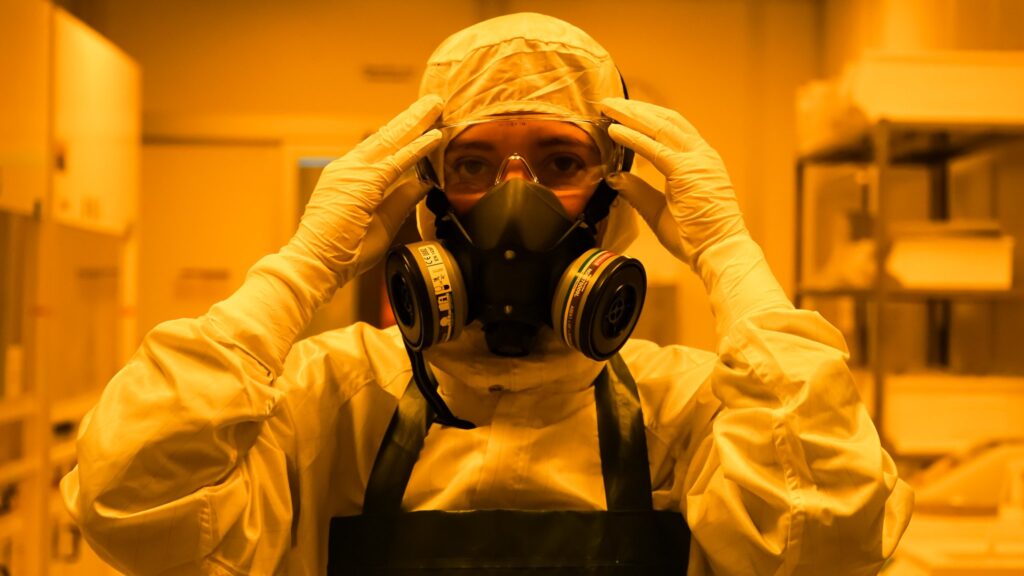
The International Iberian Nanotechnology Laboratory (INL) celebrates a significant milestone as its Nanosafety Laboratory is officially recognized for meeting the demanding standards of the Organisation for Economic Co-operation and Development (OECD) Principles of Good Laboratory Practices (GLP). This certification, granted by the Portuguese Institute for Quality (IPQ), highlights INL’s commitment to responsible innovation, establishing its laboratory as a trusted center for safe and credible nanotechnology research. Following an extensive review in May 2024, the certification assures that INL’s Nanosafety Laboratory complies with the highest international standards for testing and assessing nanomaterials, particularly for industrial and agricultural applications. The laboratory’s commitment to safe technological advancements aligns closely with INL’s mission to promote public health and environmental integrity. Leading the Way in Nanotechnology Safety With GLP certification, INL’s Nanosafety Laboratory is now validated for several essential testing areas in nanotechnology safety: This achievement is a testament to the dedicated efforts across INL’s teams, including the Alfaro-Moreno Research Group, the CQM Unit, and participants in the ERA-Chair Sinfonia and SbDToolbox projects. Contributing team members, including Filipa Lebre, Vânia Vilas-Boas, Andreia Carvalho, Ana Ribeiro, Nivedita Chatterjee, Catarina Gonçalves, Helena Macedo, Begoña Espiña, Marina Brito, Margaret Costa, Ana Teixeira, and Sadaf Almas, have driven essential […]

Read more
1 2 3 4 5 6 70